
Quality
Peptide Storage Guidelines
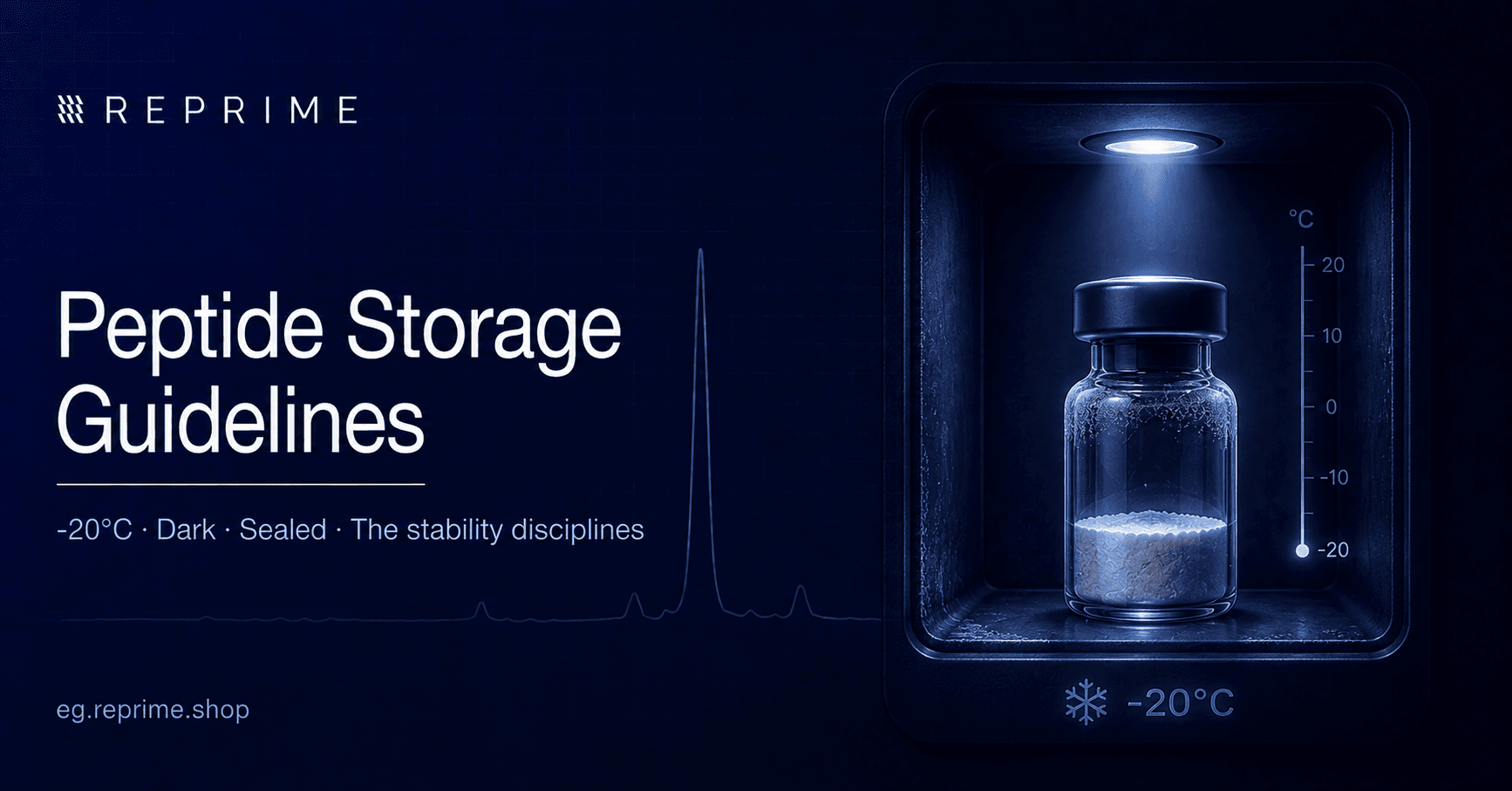
Storage discipline matters more for research peptides than for most other reagents. A field guide to what to do — and what not to do — from arrival through working solution.
Storage discipline matters more for research peptides than for most other reagents. A lyophilized peptide that has been left at room temperature for a week may look unchanged but show degraded purity on re-analysis. This guide covers what to do — and what not to do — with REPRIME peptides from arrival through working solution.
The lyophilized vial: -20°C
REPRIME peptides arrive as lyophilized powder. The recommended long-term storage is -20°C, in a dry place, sealed in the original tamper-evident pouch. At -20°C, most lyophilized peptides remain stable for 2 years from the date of manufacture — your batch's COA states the exact expiry date.
Avoid:
- Leaving the vial at room temperature for extended periods
- Repeated freeze-thaw cycles (each cycle stresses the protein structure)
- High-humidity environments (the lyophilized cake is hygroscopic — moisture is the enemy)
- Exposure to direct light for extended periods (relevant for peptides with photosensitive residues)
After reconstitution
Once reconstituted with sterile diluent, the working solution should be:
- Refrigerated at 2–8°C, not frozen (freezing reconstituted peptide can cause precipitation and irreversible aggregation)
- Used within the period specified on the COA — typically 7–30 days depending on the peptide
- Stored in a properly sealed vial to prevent contamination
The working solution loses purity faster than the lyophilized form. Plan reconstitution timing accordingly — don't reconstitute six months of supply in one go.
What about long-term storage at -80°C?
For some peptides, -80°C extends shelf life beyond the -20°C COA value. Most REPRIME peptides do not require it — the lyophilization process and -20°C storage cover the documented stability window in the Certificates repository. -80°C is more relevant for reconstituted aliquots than for lyophilized vials, and only worthwhile when extended-protocol use is planned.
How to know if a peptide has degraded
Visual inspection of the lyophilized powder is unreliable — degradation is rarely visible. The reliable test is HPLC re-analysis, which most research labs don't have in-house. The practical rule: if the COA expiry has passed and the peptide is critical to results, order a fresh batch. The cost of a flawed result far exceeds the cost of a new vial.
Shipping arrival
When a REPRIME package arrives, transfer the vial to a -20°C freezer within a few hours. Don't leave it on a lab bench overnight. The insulated packaging buys you a window — typically 48 hours — but it is not unlimited. Verify the code on the package insert at /verify on first use.
For more on how REPRIME packaging handles Egypt's climate, see Cold-Chain Shipping in Egypt and Shipping Peptides in Hot Climates. For the related question of why peptides ship as powder rather than solution, see Lyophilized Powder vs Solution.