REPRIME Journal
Background reading on the molecules we make and the science behind them.
Lab-made amino-acid chains used to study receptors, signaling, and cellular processes — what research peptides are, how they are tested, and what research-use-only means.
What retatrutide (LY3437943) is, how its GIP + GLP-1 + glucagon triple-agonist design works, what clinical trials report, and how research-grade material is verified.
A dual-agonist research peptide that activates GLP-1 and GIP receptors with a single backbone — what makes it structurally distinctive, and how REPRIME confirms identity for every batch.
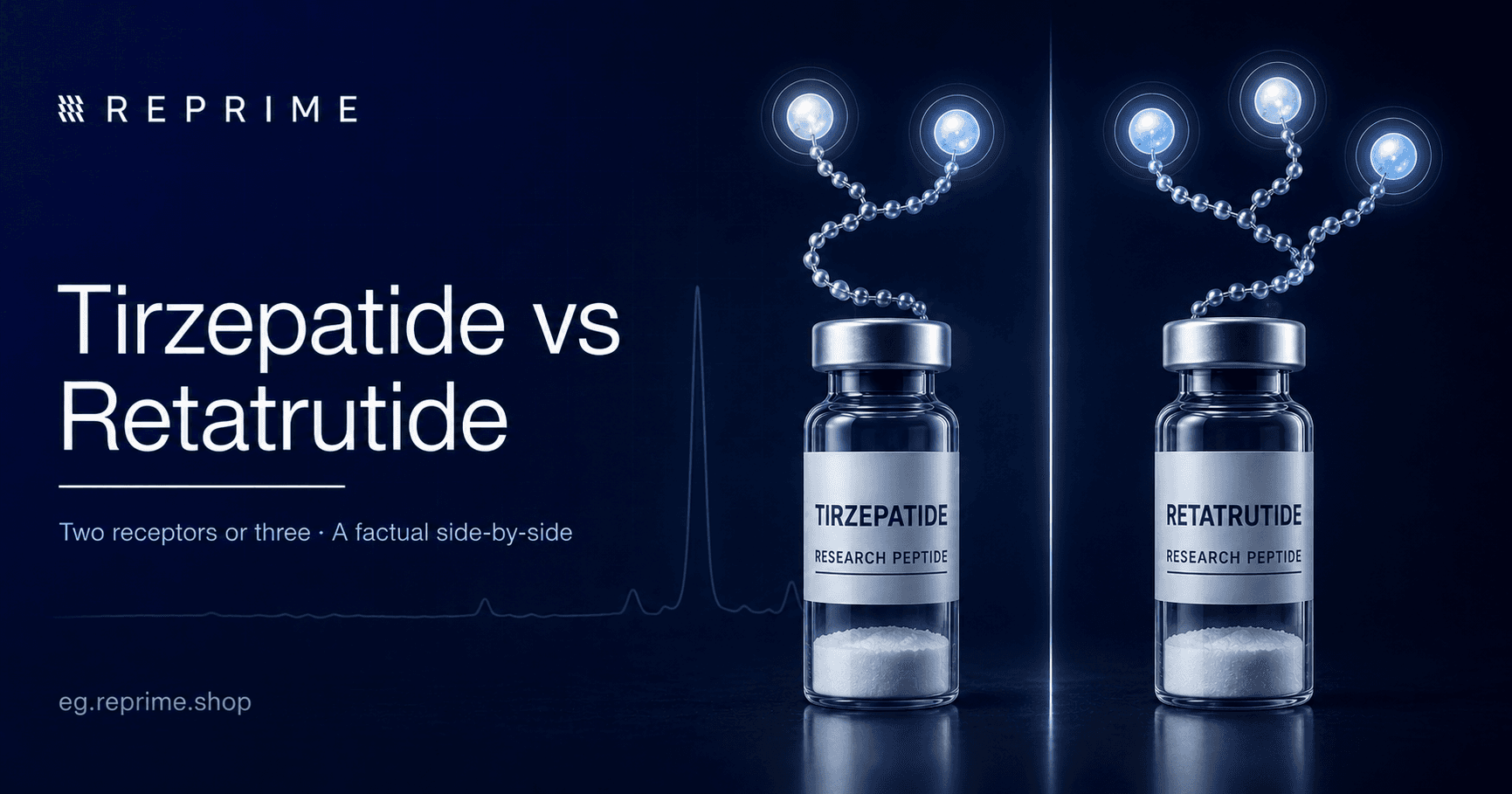
Tirzepatide (two receptors, approved) vs retatrutide (three, investigational): a factual side-by-side of design, mechanism, trial evidence, and research use.
A GHRH analog with a single N-terminal modification that extends serum half-life from minutes to hours — what makes it useful in laboratory research.
A pentadecapeptide derived from a stable sequence in human gastric juice — what it is, why researchers use it, and how REPRIME verifies every batch.
A modified insulin-like growth factor with engineered binding-protein resistance and extended half-life. The entry-level explainer for one of REPRIME's longest-studied peptides.
One of the few research peptides whose template lives inside the mitochondrion itself — what that means, and why MOTS-C has driven a decade of research into cellular energetics.
Why two peptides — a GHRH analog and a GHRP — are commonly studied together, and why REPRIME ships them as a single blended vial rather than two separate ones.
A 44-amino-acid GHRH analog with a single hexenoic-acid modification that extends its kinetic profile — what that means in the lab, and how REPRIME verifies the molecule.
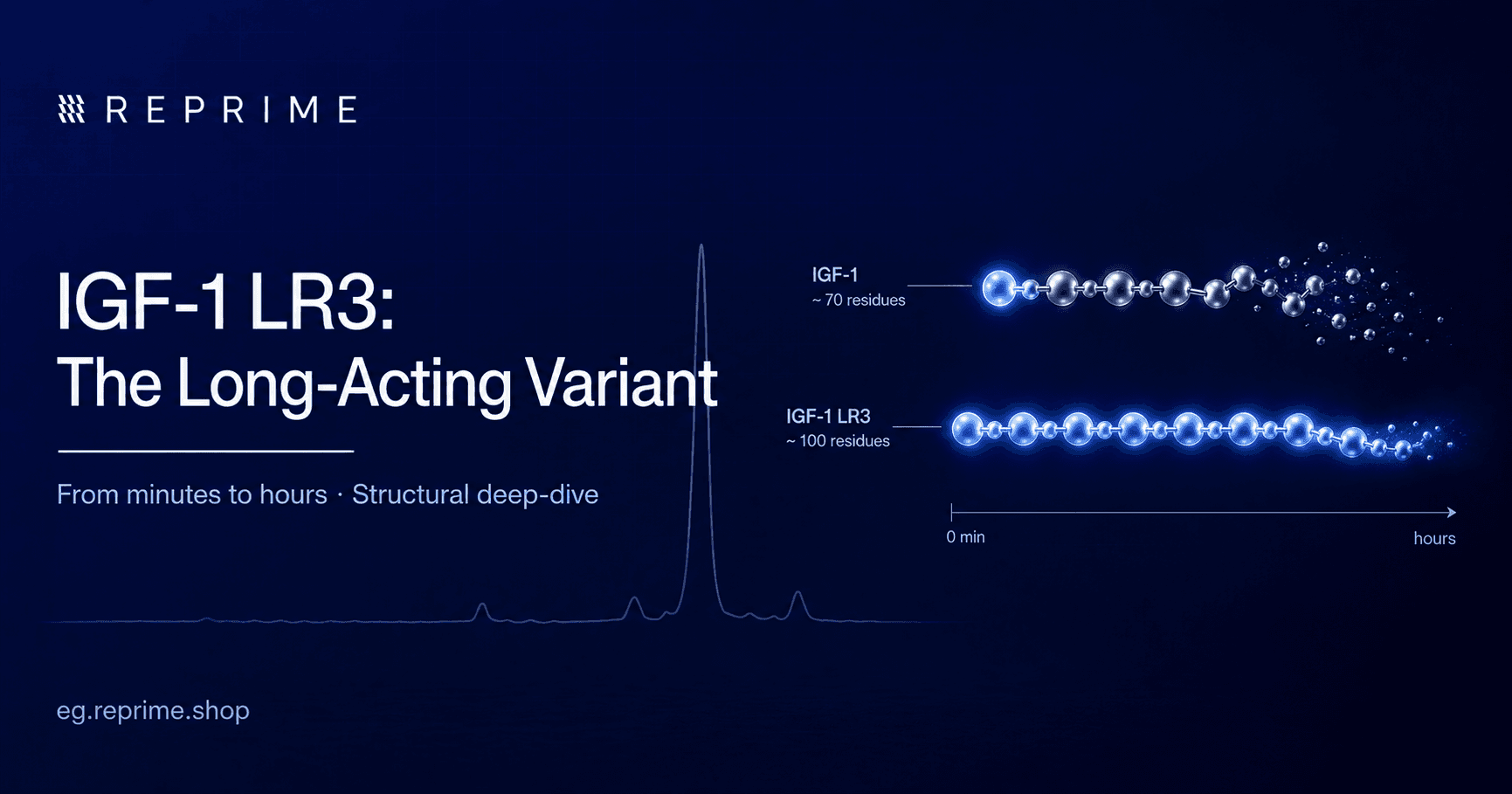
Native IGF-1 has a half-life measured in minutes. IGF-1 LR3 is engineered to last hours — what changed structurally, and why that distinction matters in a research protocol.
Two of the most-cited peptides in tissue-repair research, paired in a single blended vial. What each brings independently and why labs commonly study them together.
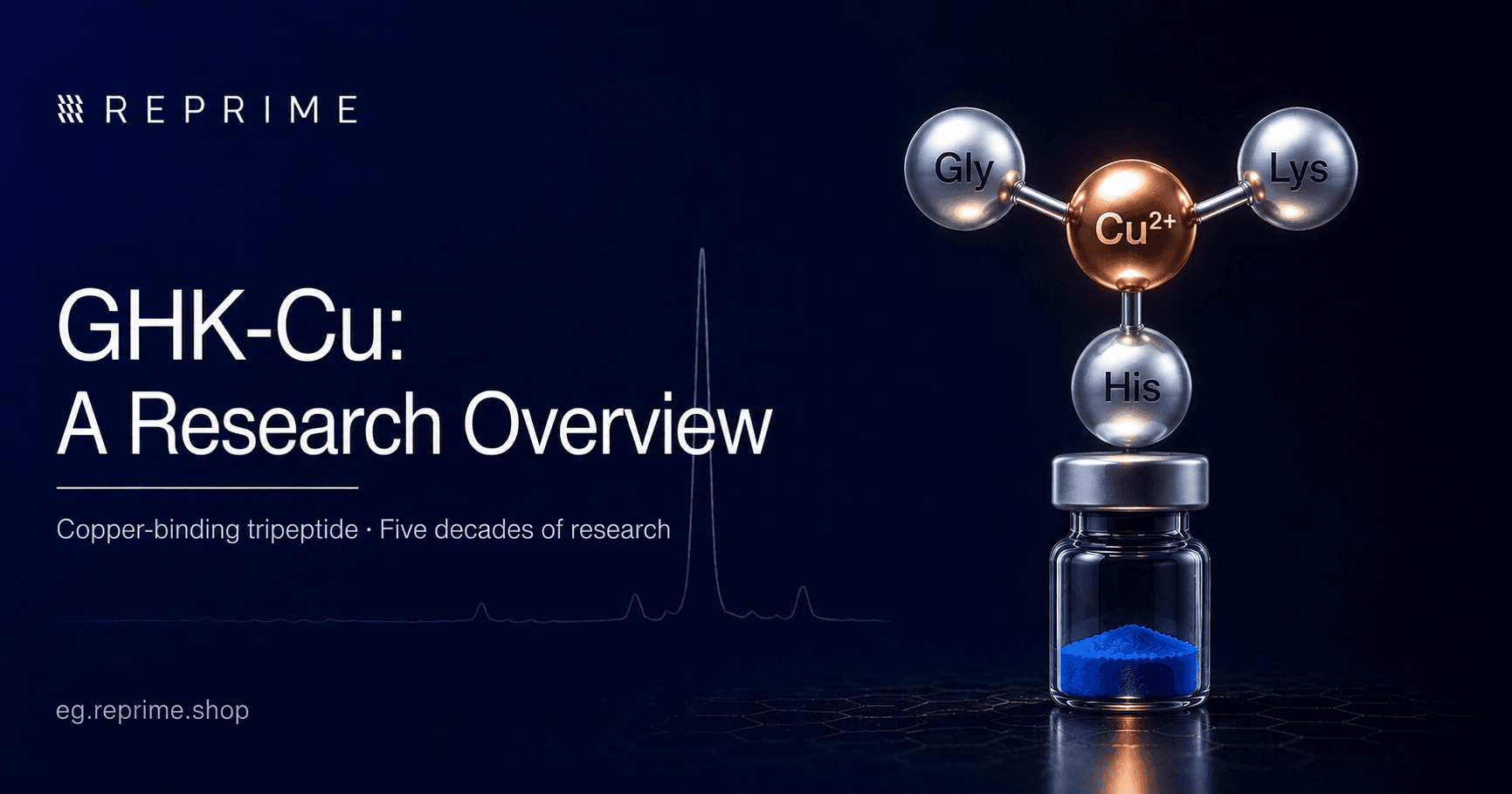
What the GHK-Cu copper-peptide complex is, how GHK and GHK-Cu differ, and what five decades of research actually shows — organized by evidence level.

How the longevity field has reframed metabolic health — and why peptide research has become central to the conversation.
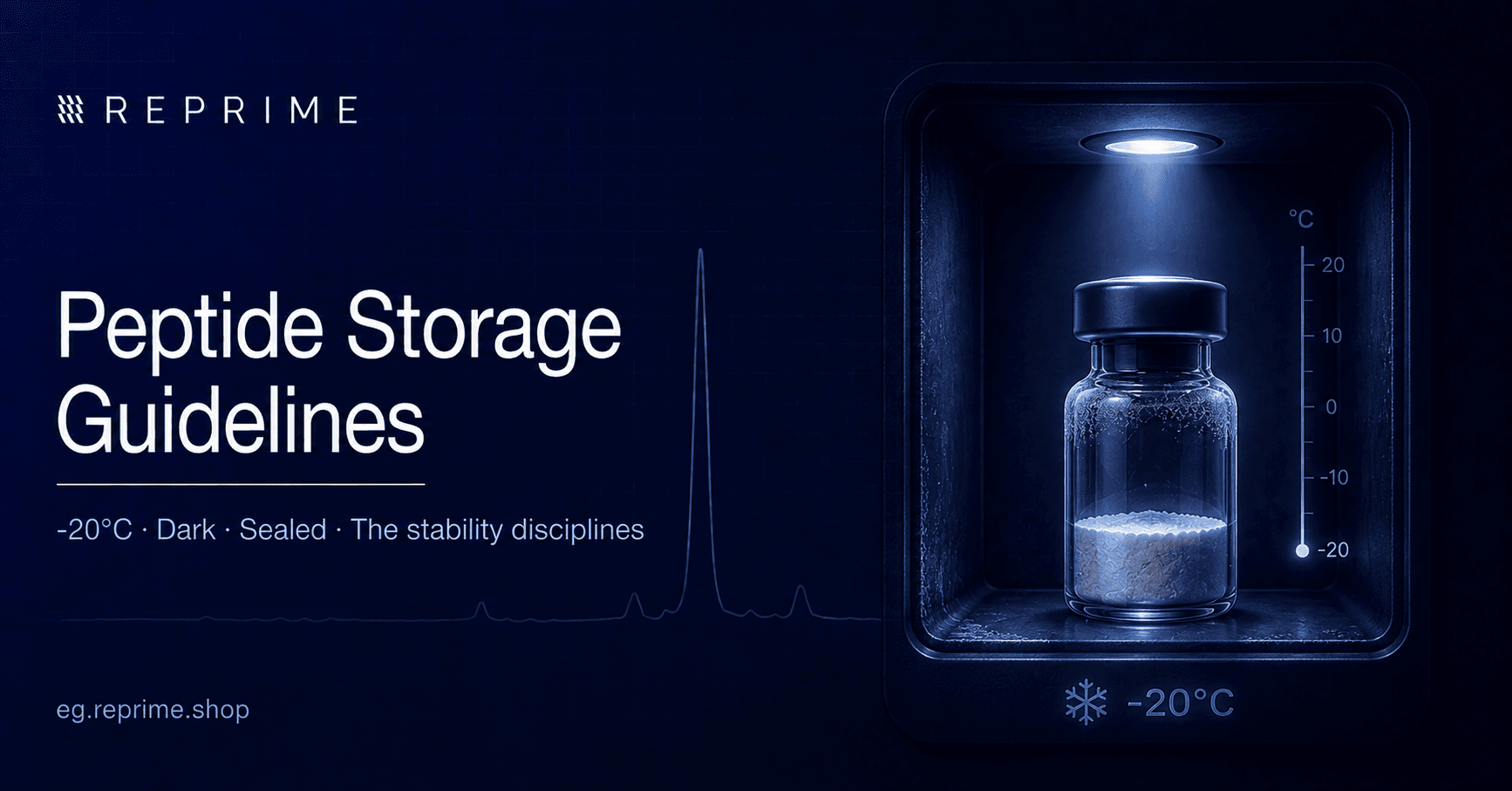
Storage discipline matters more for research peptides than for most other reagents. A field guide to what to do — and what not to do — from arrival through working solution.
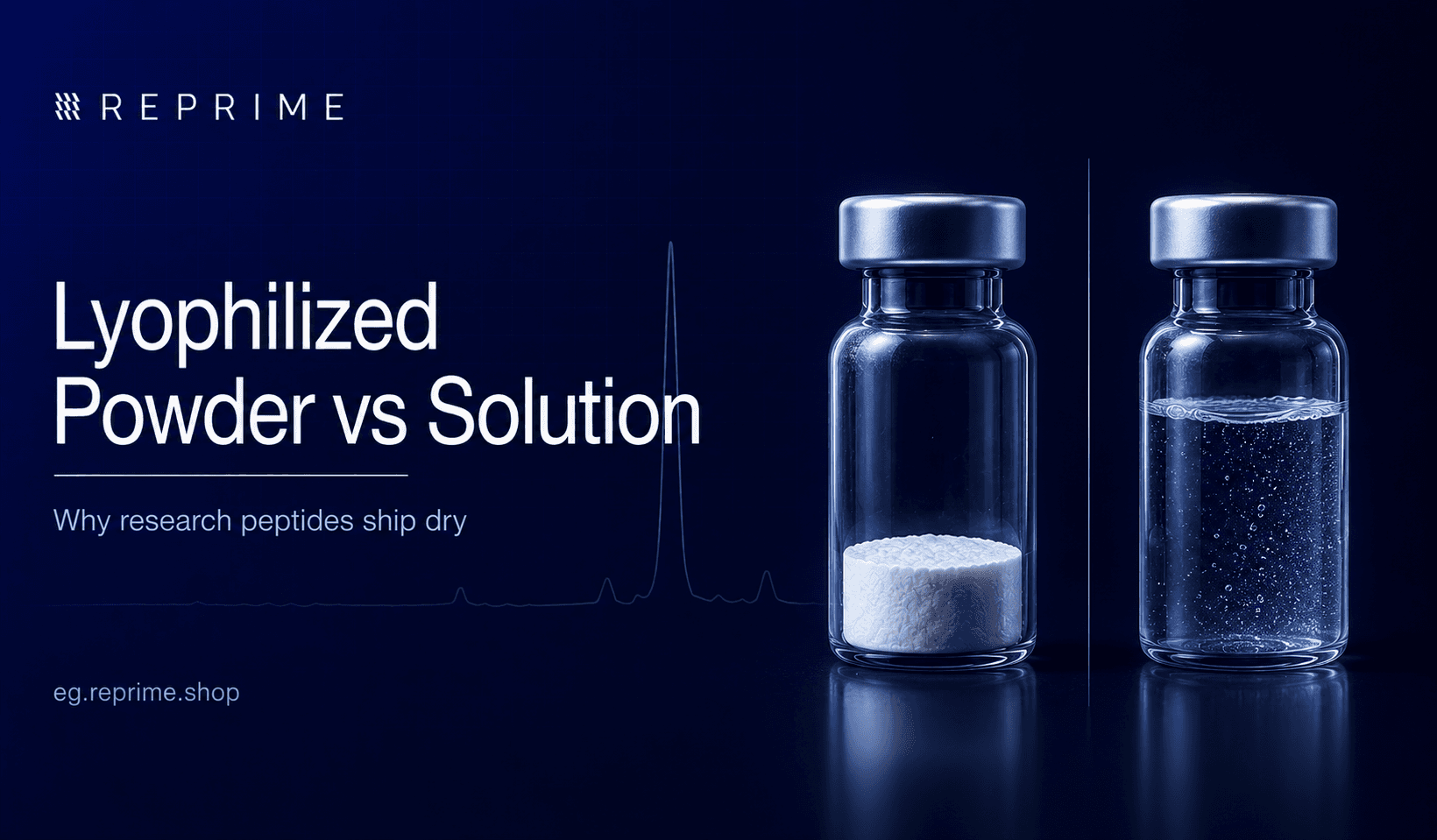
Why every research-grade peptide ships as freeze-dried powder rather than pre-reconstituted solution — and how that choice affects stability, shipping, and protocol control.
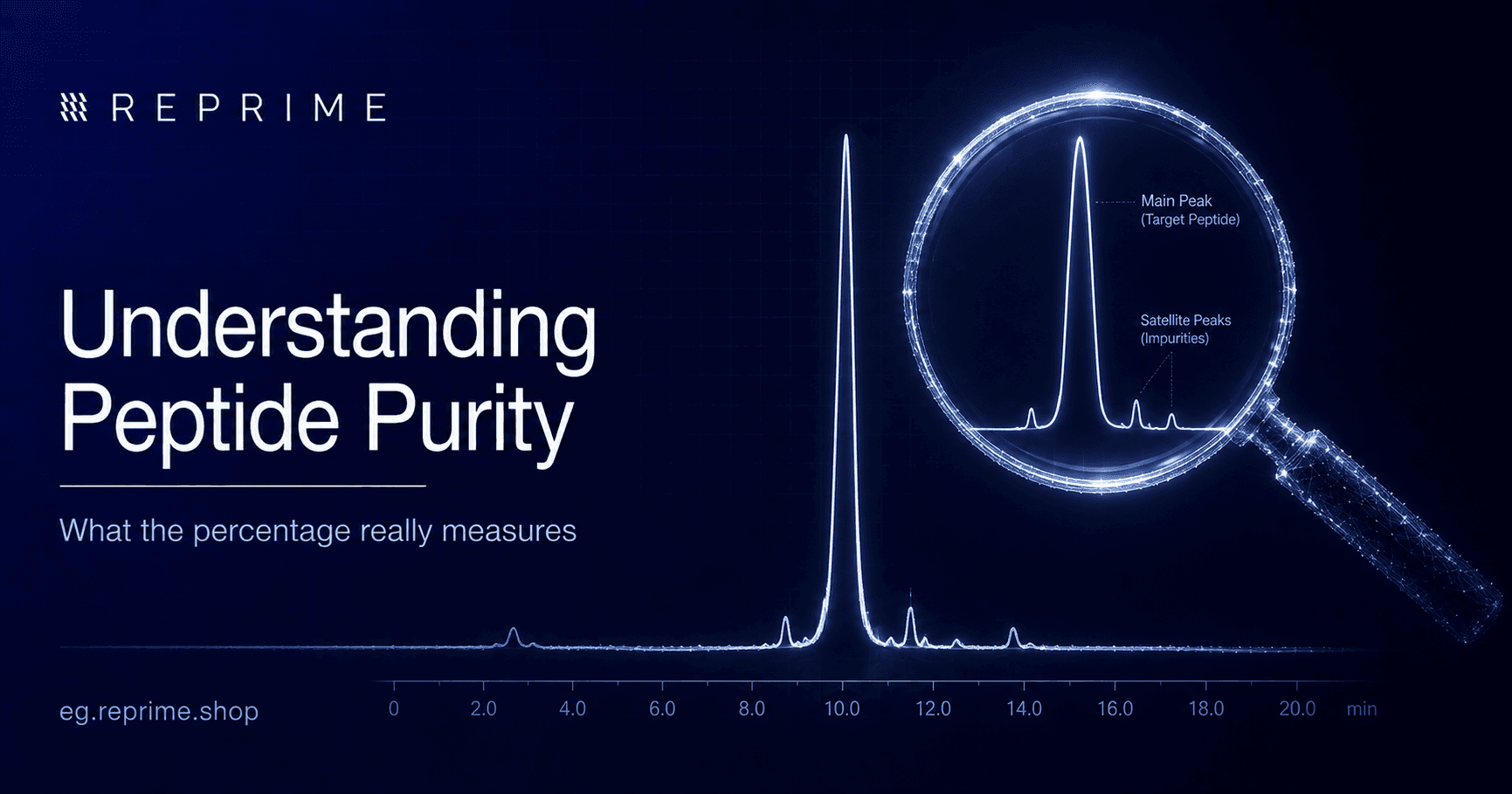
What a peptide purity percentage actually measures, what the impurities are, why purity and identity are different questions, and what the number can't tell you.
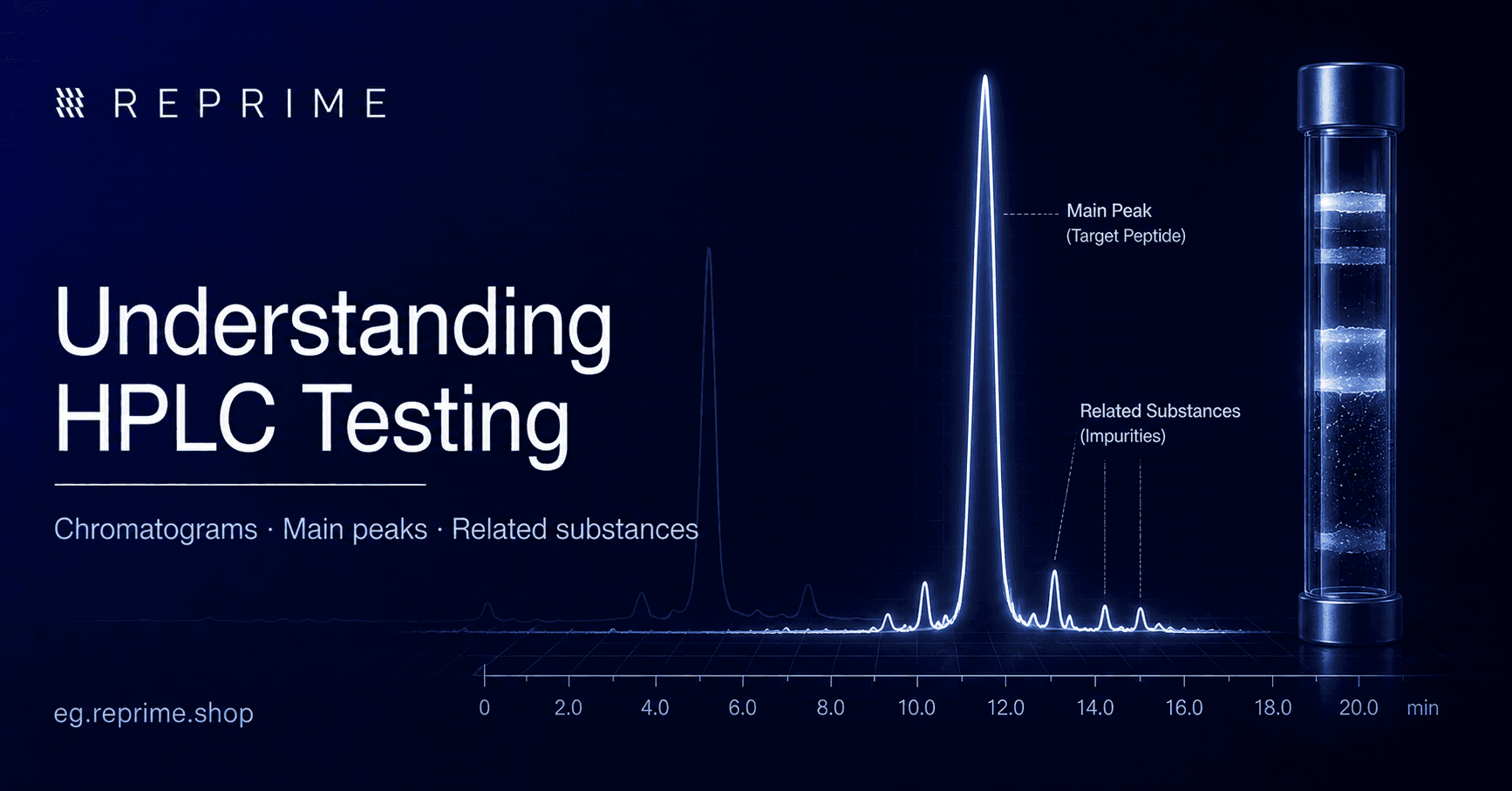
How HPLC works, how to read a chromatogram, what the main peak and purity percentage represent — and what HPLC alone can never prove about a peptide.
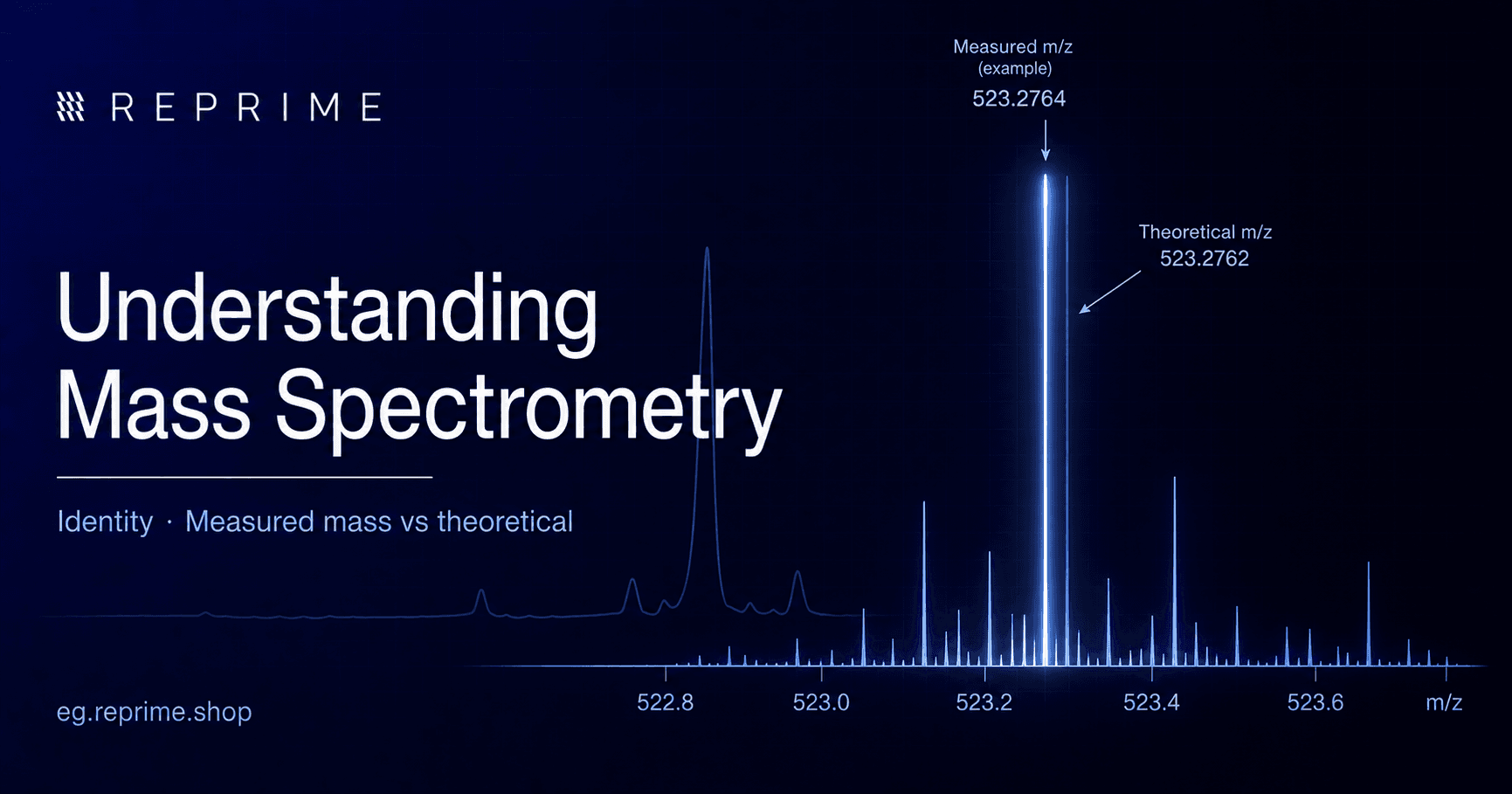
Mass spectrometry is the workhorse technique for confirming peptide identity. Here is what it measures, how REPRIME uses it, and how it pairs with HPLC.
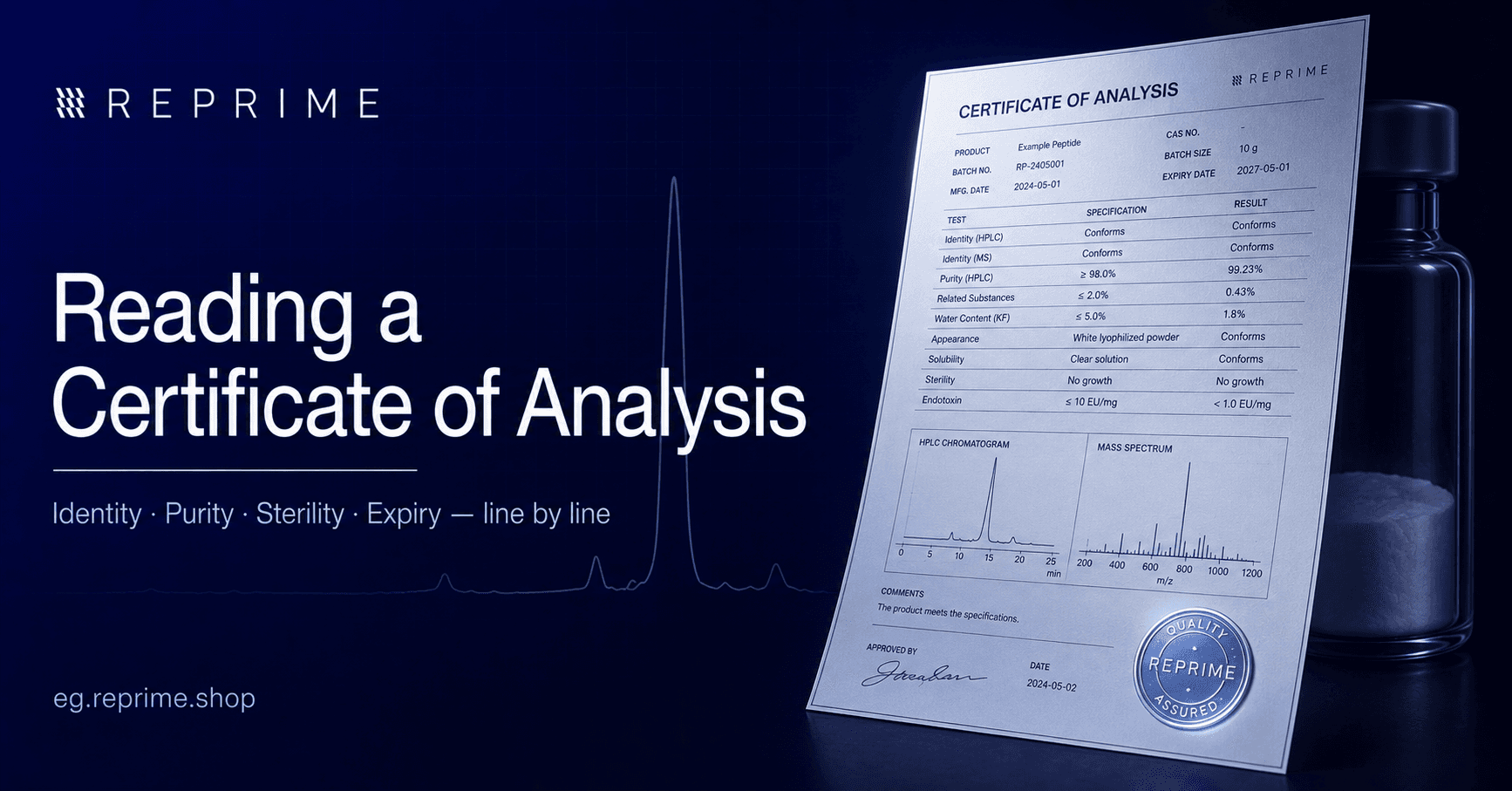
Every REPRIME vial ships with a COA in the public Certificates repository. The document is detailed, sometimes intimidating, and the information matters. Here is how to read one.
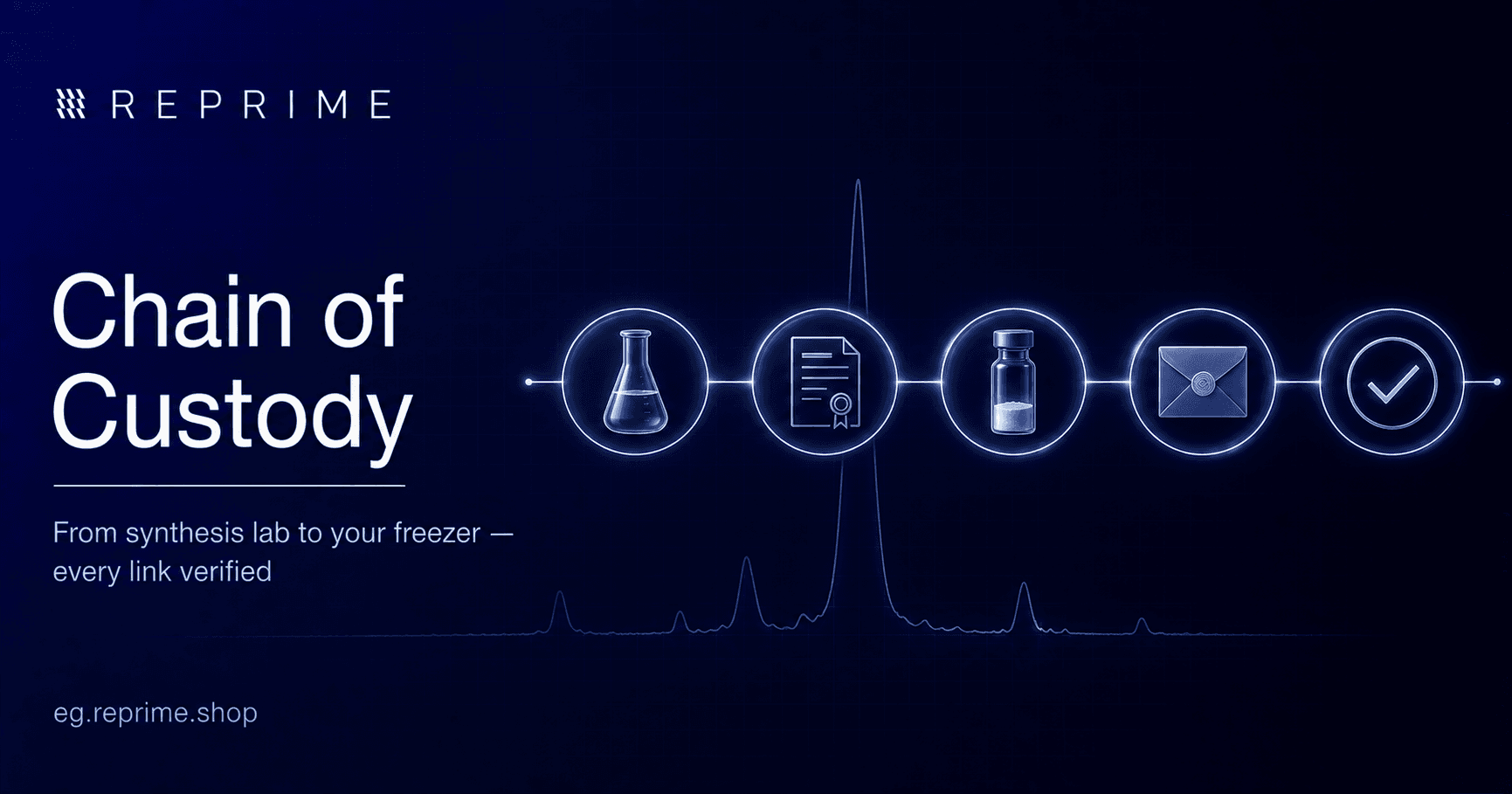
A research peptide passes through several hands between the synthesis lab and the customer's freezer. Here is REPRIME's full chain of custody and how every link is verified.

What a verification code proves, what it can't, and why authenticity and identity are different questions — the entry-level guide to checking a REPRIME package.
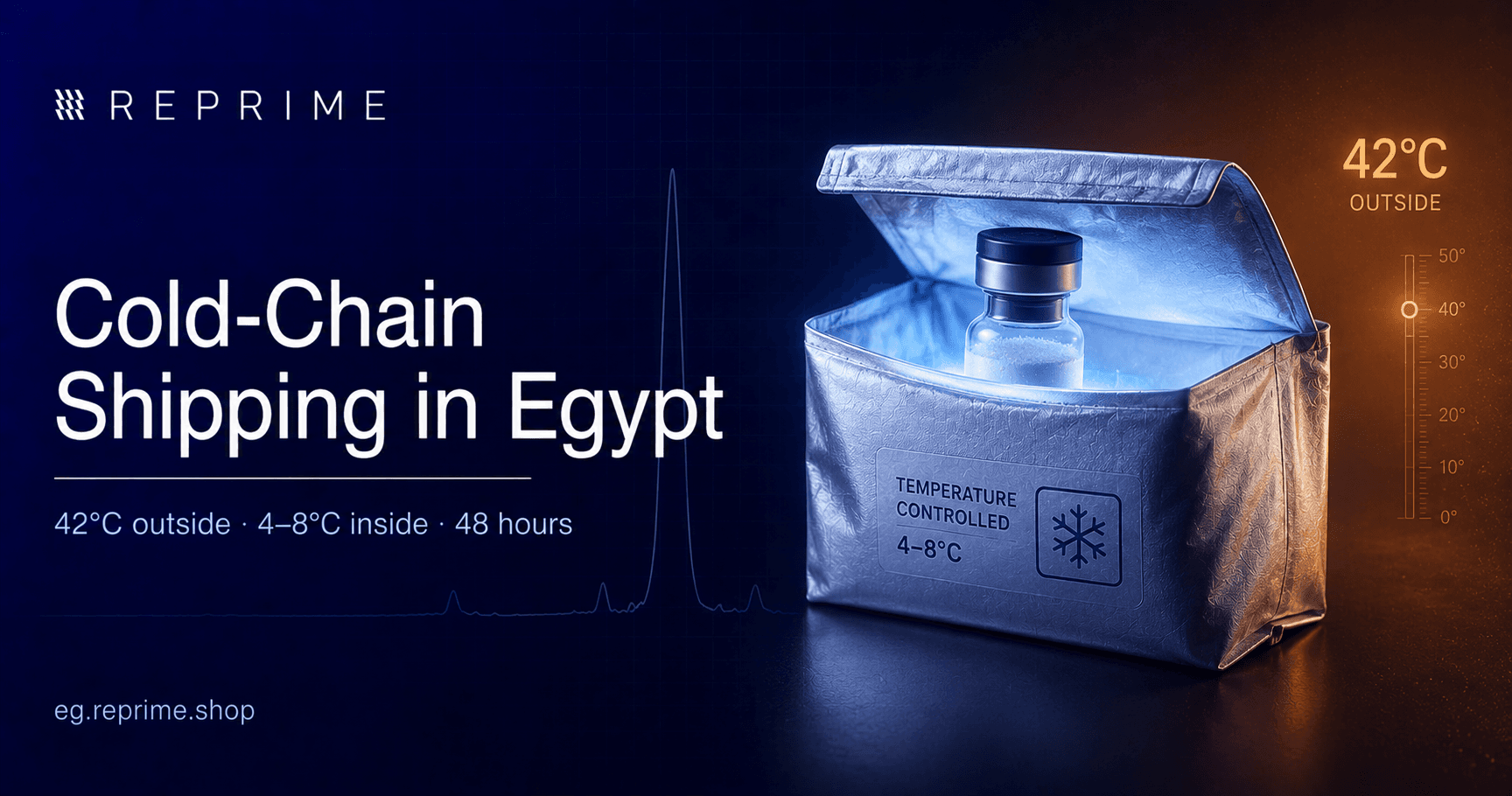
Cairo summer afternoons hit 42°C. Here is how REPRIME's insulated packaging keeps lyophilized peptide stable from Cairo to Aswan — and what you should do when the package arrives.
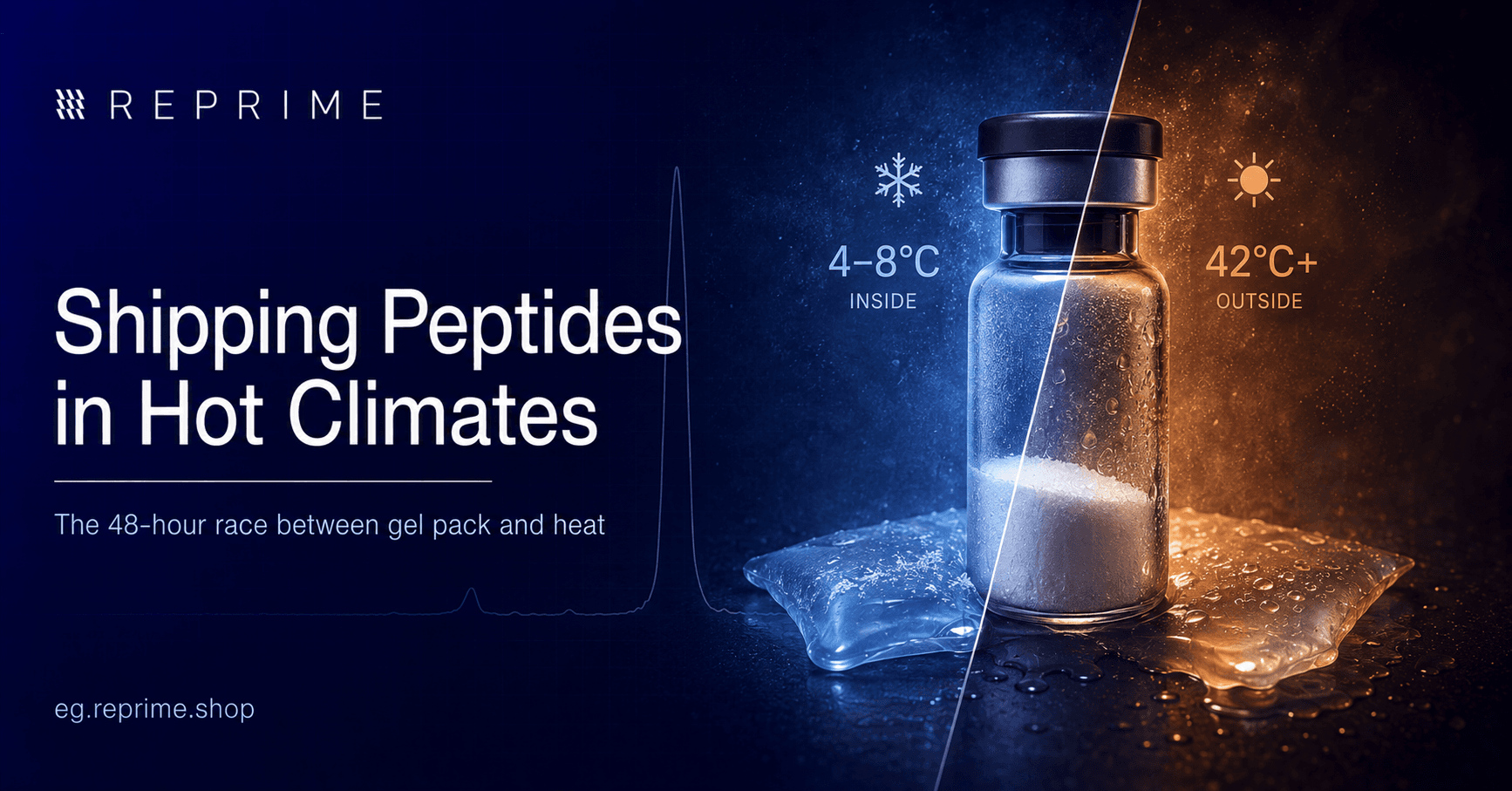
Lyophilized peptide in transit is in a 48-hour race against the gel pack. The principles that make it work in Egypt apply anywhere temperature is a concern.
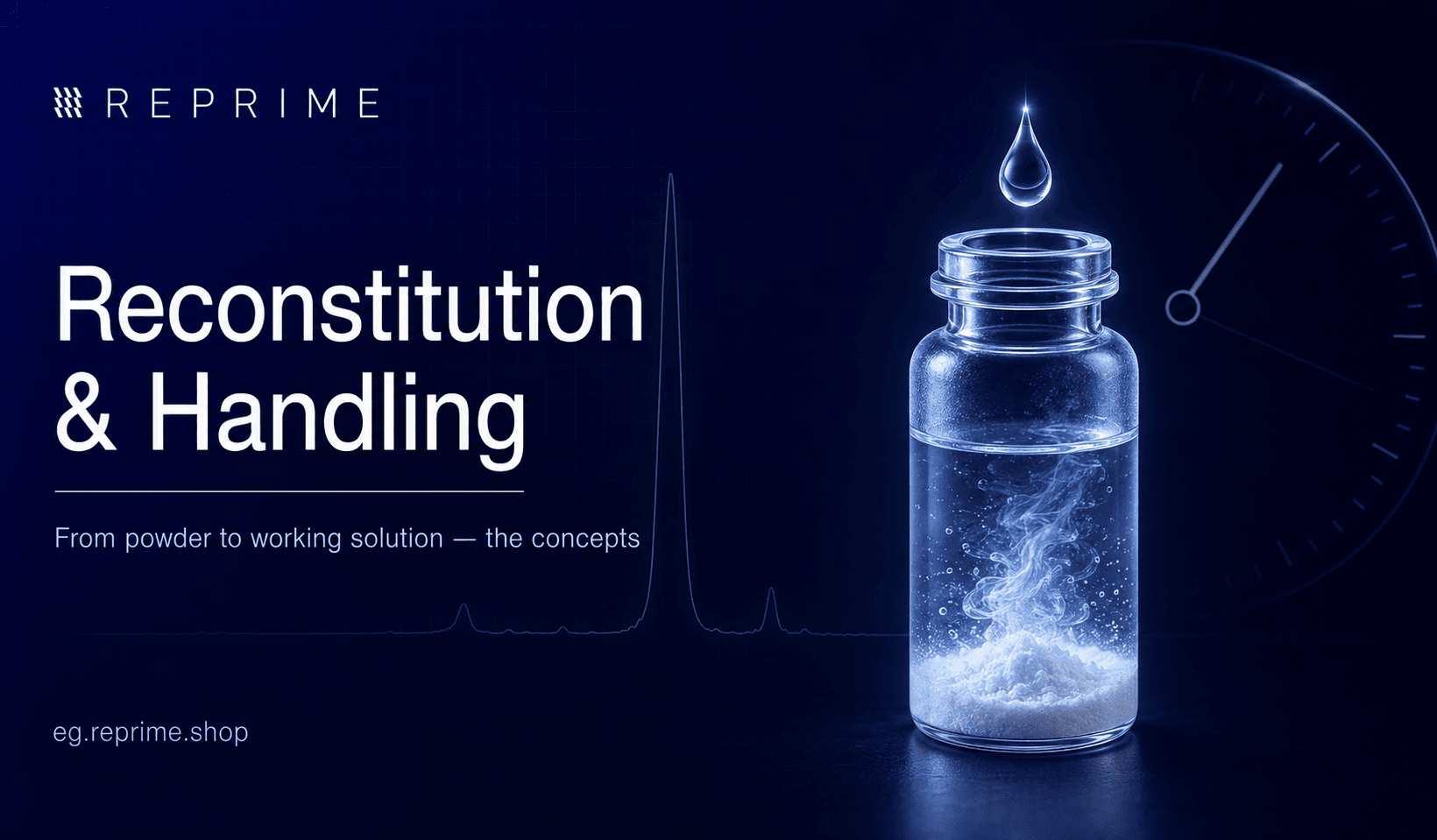
What reconstituting a lyophilized research peptide actually involves: why solubility differs, choosing a laboratory diluent conceptually, contamination control, stability, and what dissolution can never prove.
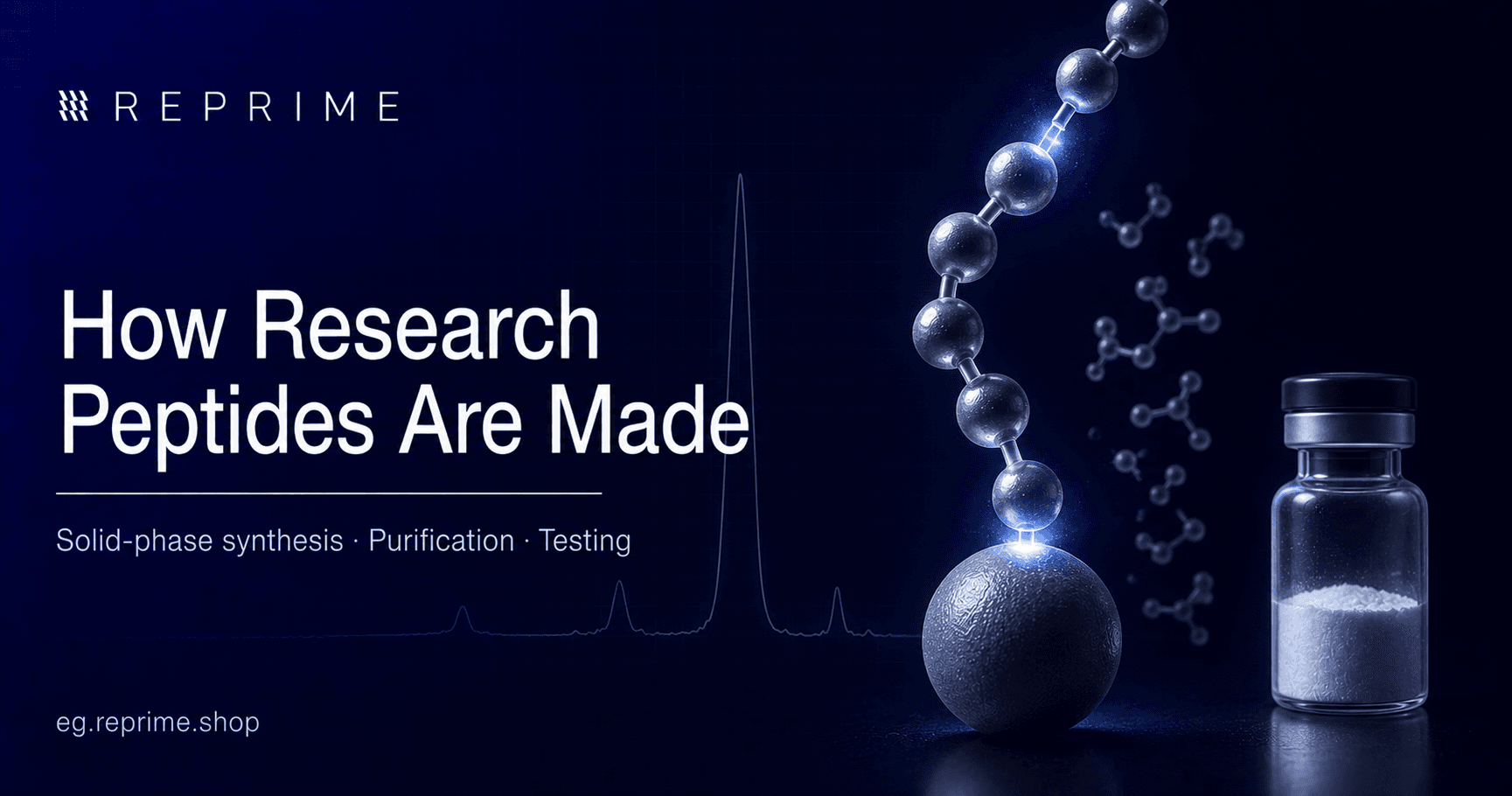
From sequence to vial: how solid-phase peptide synthesis assembles a peptide one residue at a time, why deletion sequences arise, and how purification, testing, and lyophilization finish the job.
α-MSH's three-residue fragment — what KPV is, why inflammation-signalling research uses it, and how research-grade material is verified.
The long-acting amylin analog reshaping appetite-regulation research — what cagrilintide is, how it complements incretin agonists, and how it is verified.
Vasoactive intestinal peptide — the 28-residue neuropeptide behind decades of immune, pulmonary, and circadian research, explained.
The EPO-derived helix-B peptide (cibinetide) — how it separates tissue-protective signalling from blood-cell effects, and what researchers use it for.
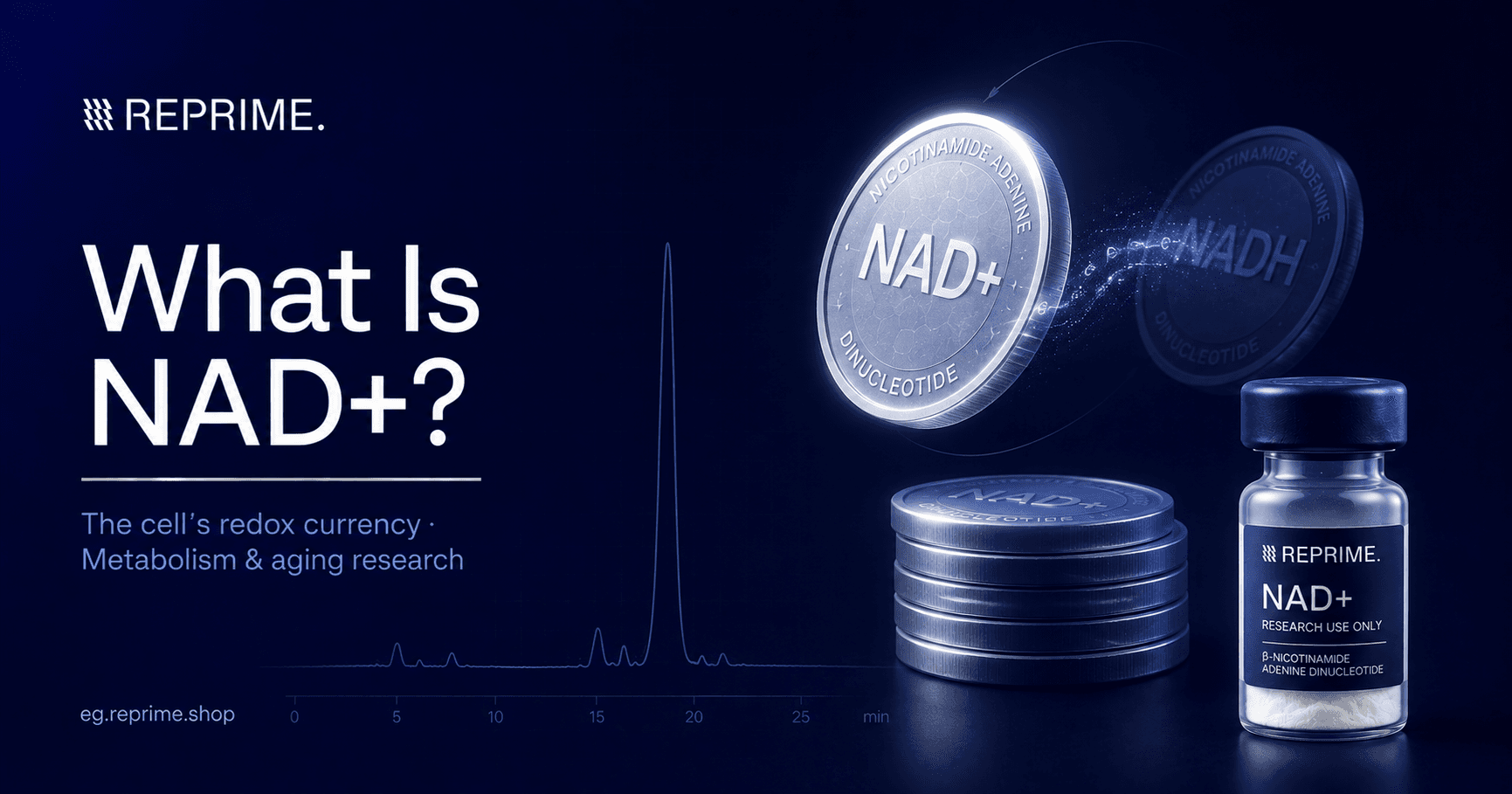
The central redox coenzyme of cellular metabolism — what NAD+ actually is, why it anchors aging research, and what research-grade supply means.
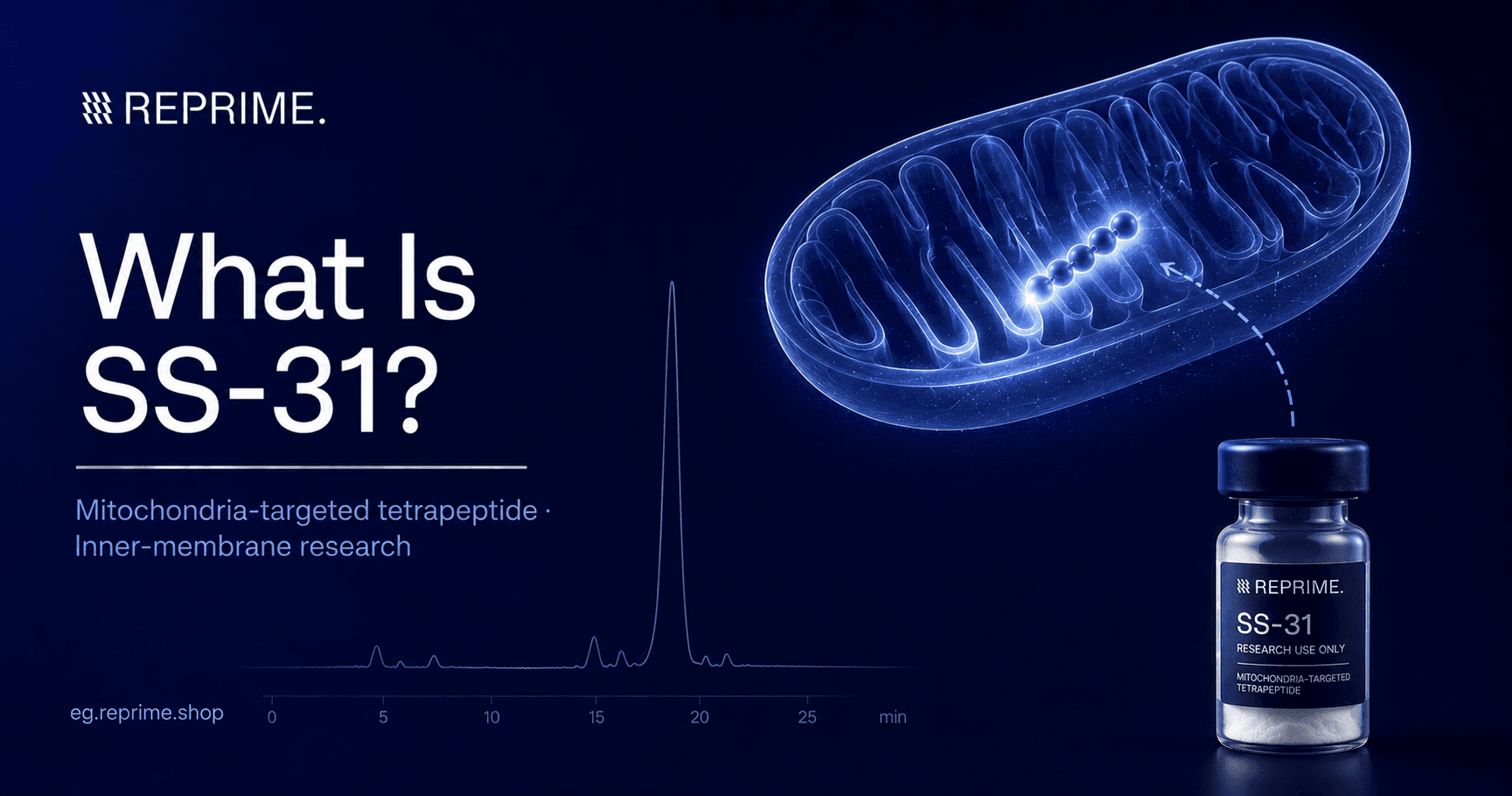
The mitochondria-targeted tetrapeptide (elamipretide) — how cardiolipin binding gets it where other compounds can't go, and what that enables.
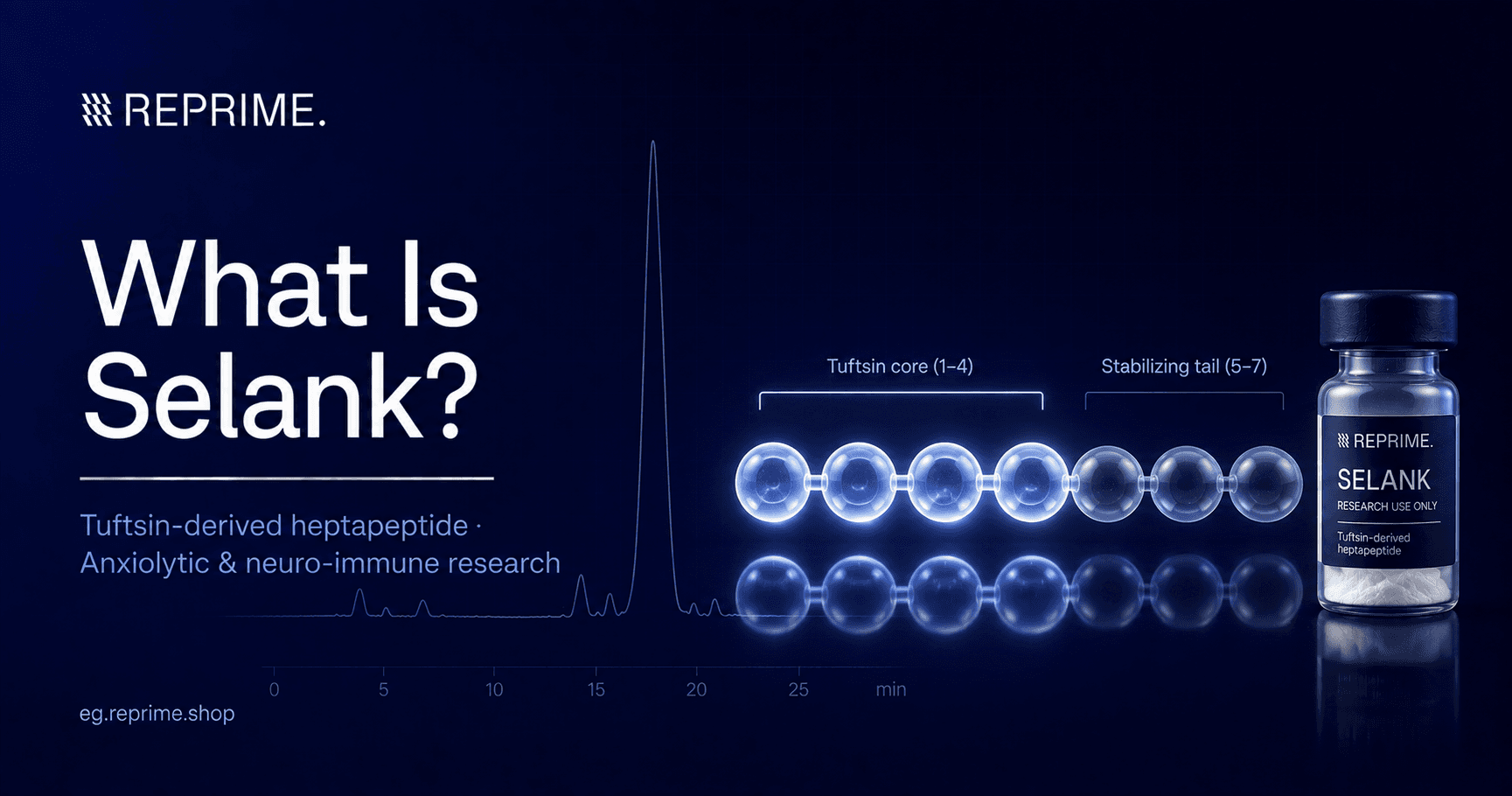
The tuftsin-derived heptapeptide studied in anxiolytic and neuro-immune research — origins, design, and research context.
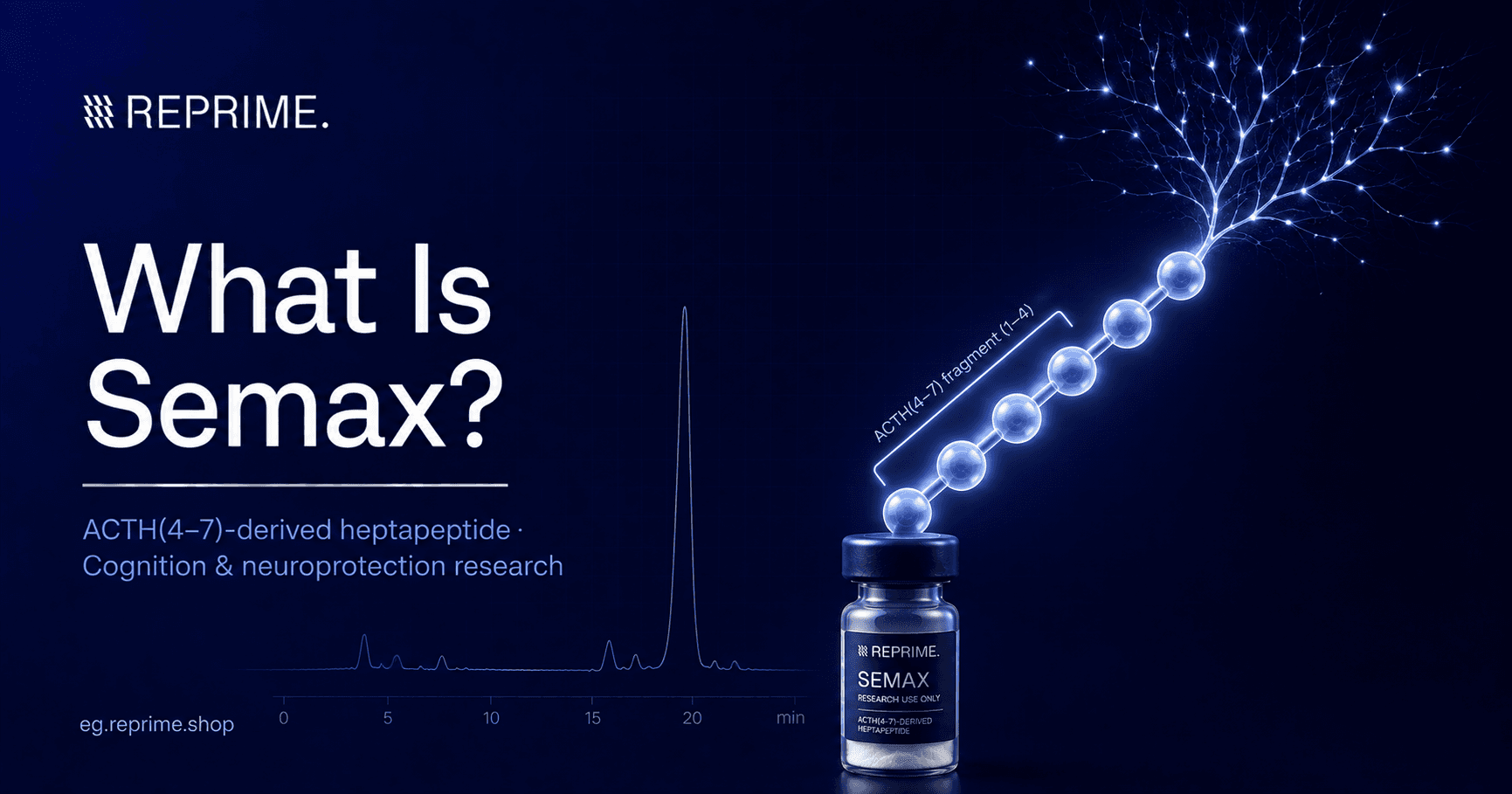
The ACTH(4–7)-derived heptapeptide studied in cognition and neuroprotection research — design, history, and research context.
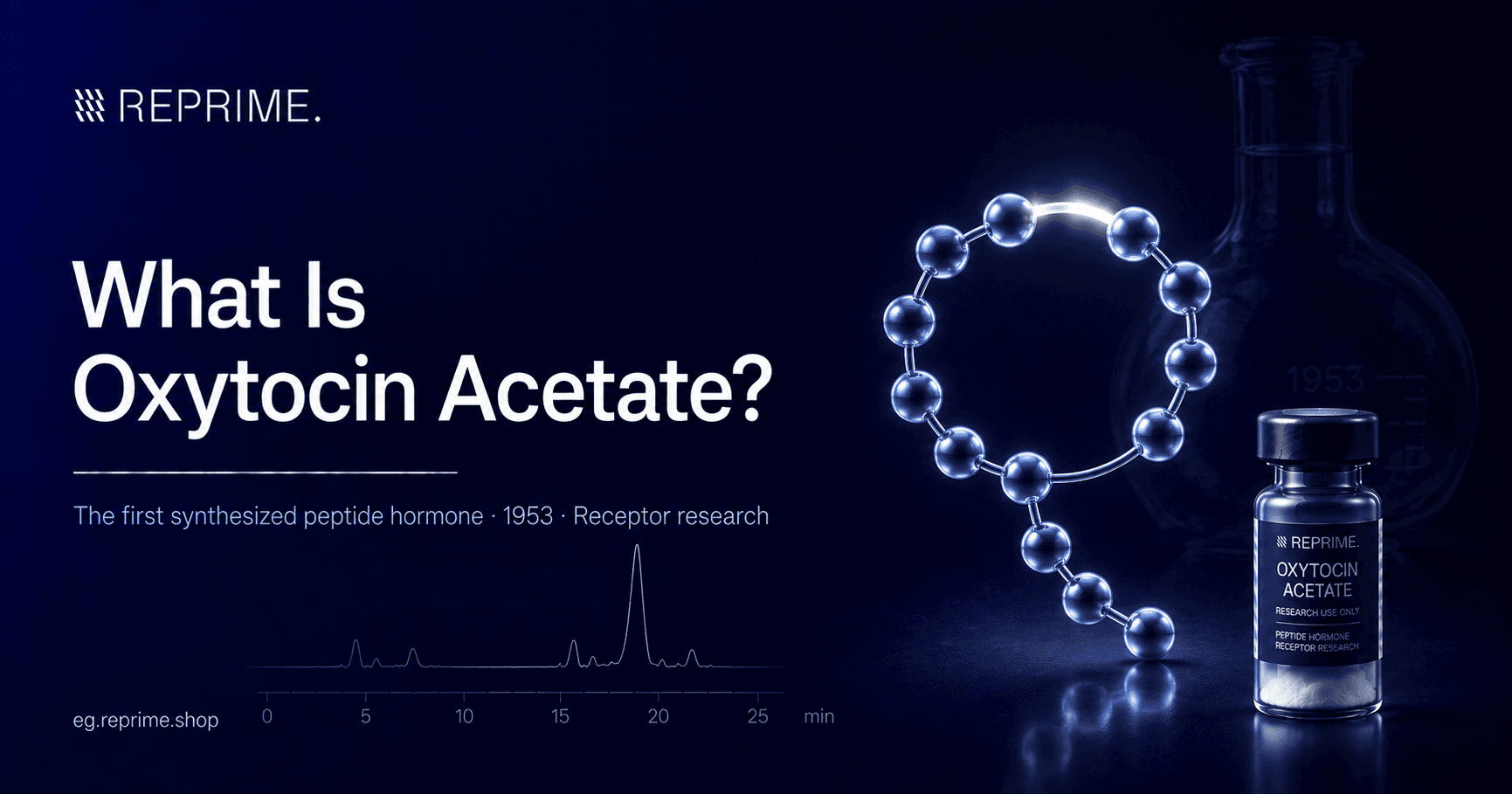
The first peptide hormone ever synthesised, in its standard research form — oxytocin's structure, history, and place in receptor research.
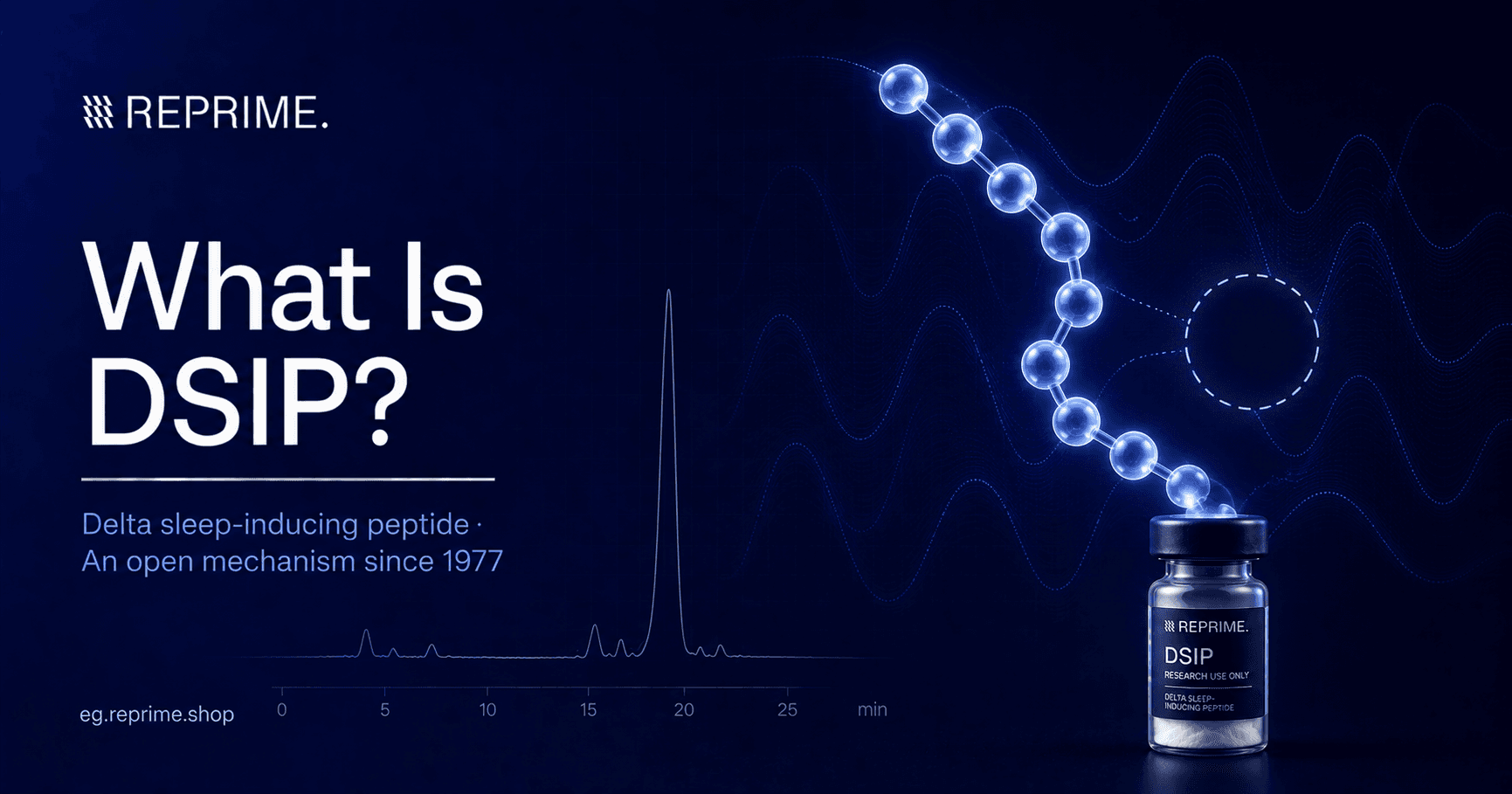
Delta sleep-inducing peptide — the 1977 discovery whose mechanism is still open, and why that keeps it in sleep research.
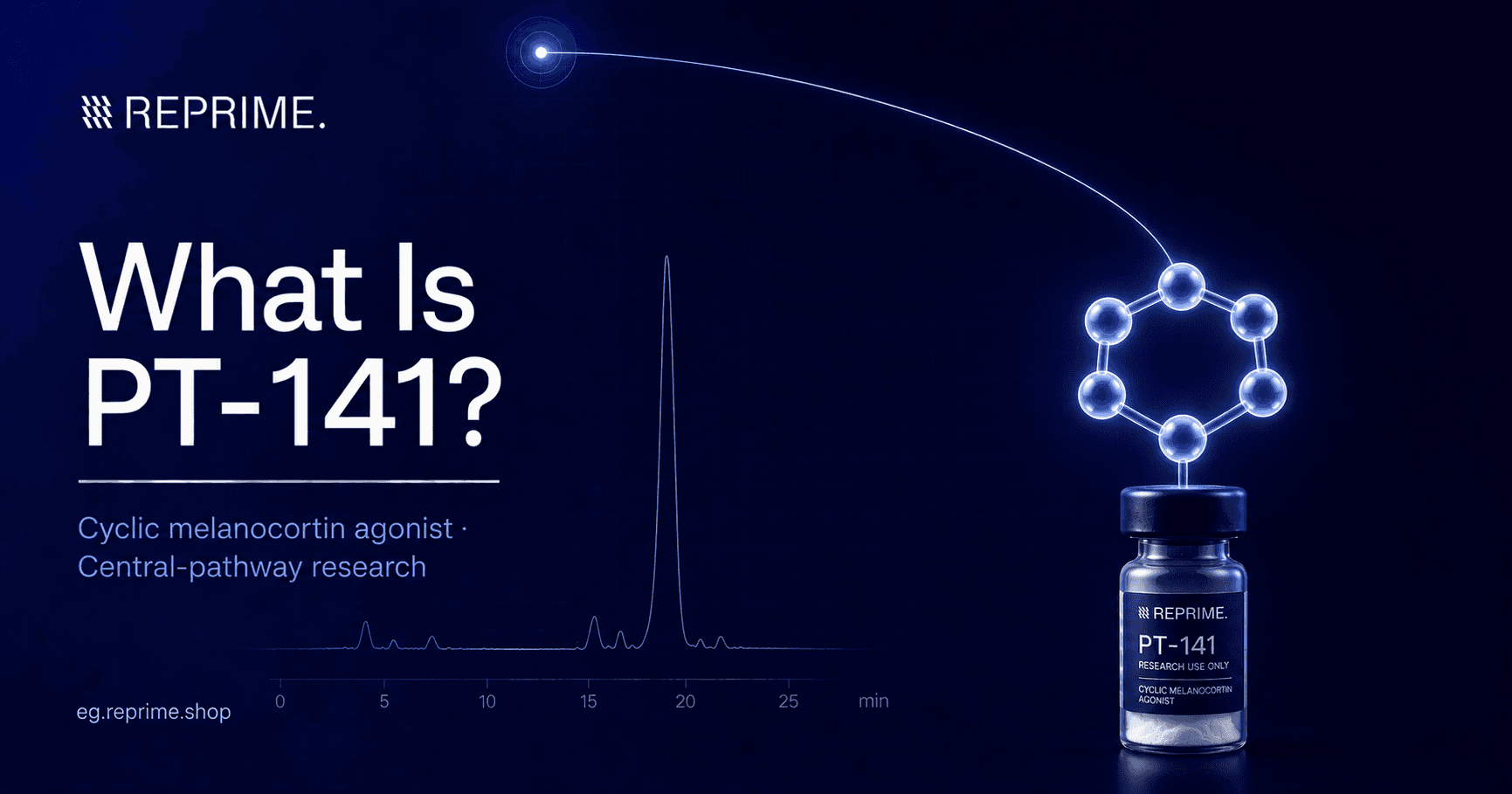
PT-141 (bremelanotide) — the cyclic melanocortin agonist derived from Melanotan II, and its place in central-pathway research.
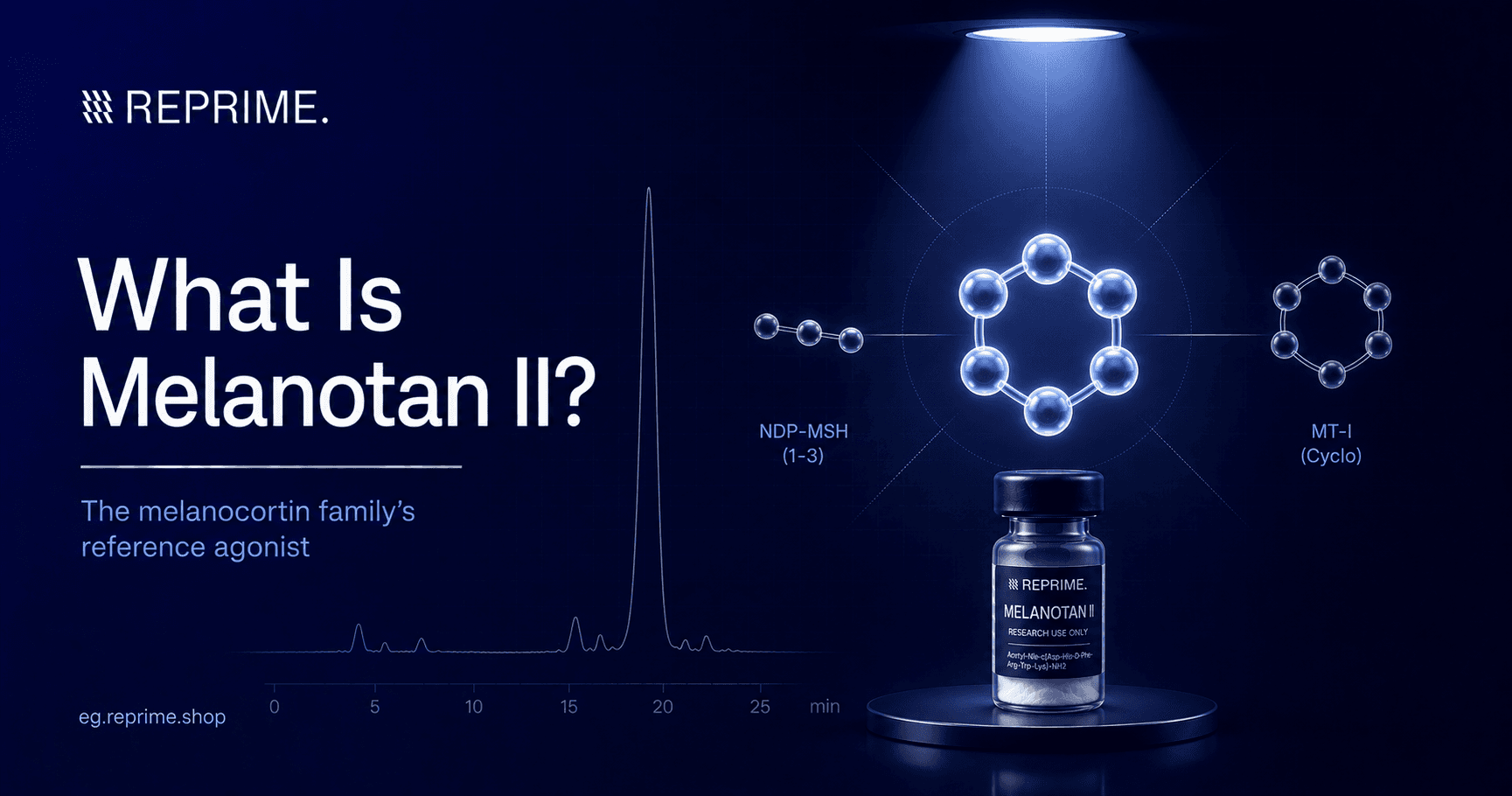
The cyclic α-MSH analog that became melanocortin research's reference agonist — structure, history, and how it anchors the family.
The tetrapeptide AEDG at the heart of telomerase and pineal research — what Epithalon is and how to read its debated literature.
The cartilage-research member of the Khavinson bioregulator family — what Cartalax is and how the family is studied as a set.
The CNS tripeptide of the Khavinson bioregulator family — Glu-Asp-Arg, its neuroprotection literature, and how it fits the set.
The angiotensin IV-derived peptide engineered to survive — DIHEXA's HGF/c-Met research story and why stability changed the questions.
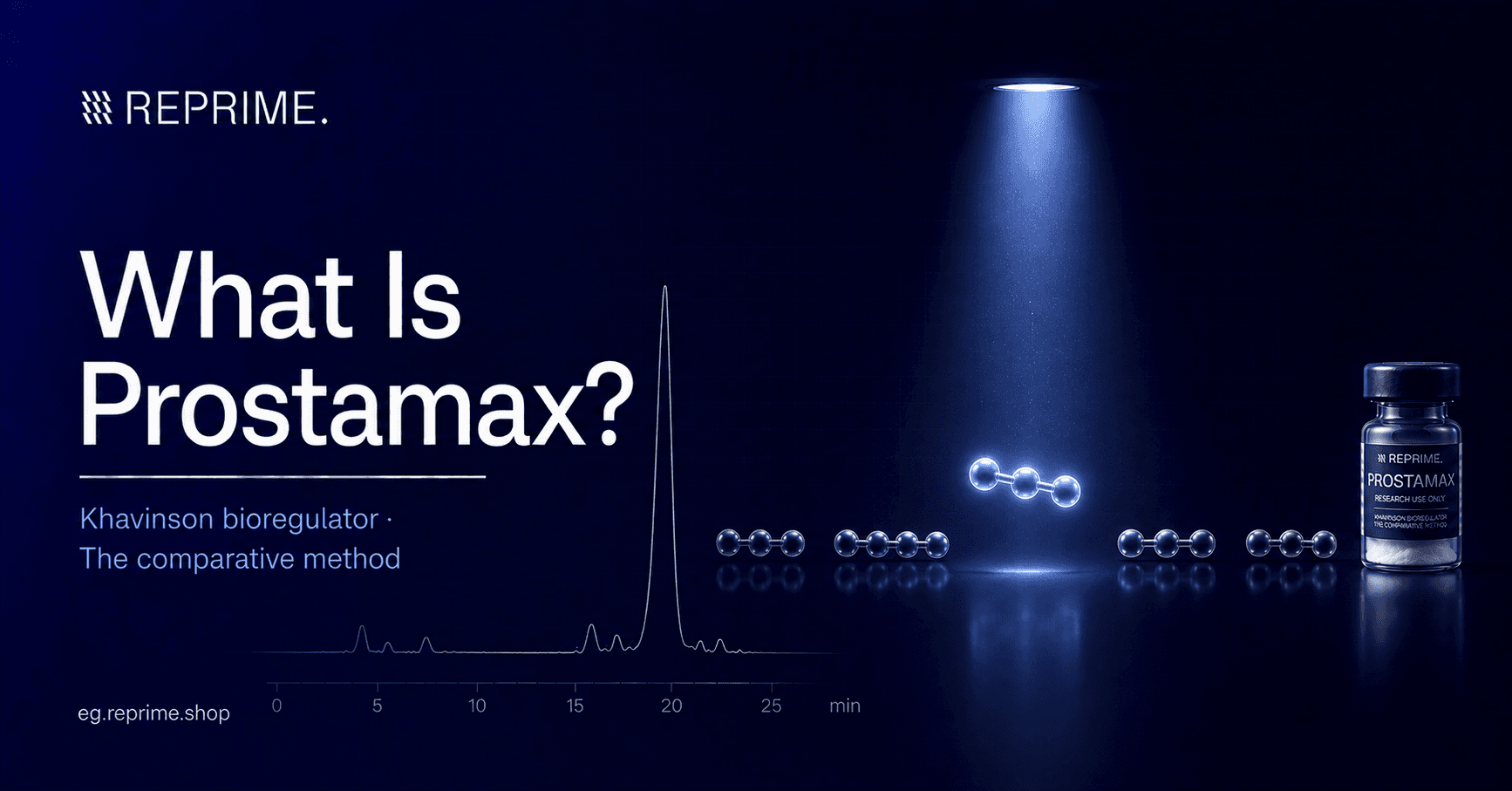
The prostate-research member of the Khavinson bioregulator family — what Prostamax is and its role in the comparative set.
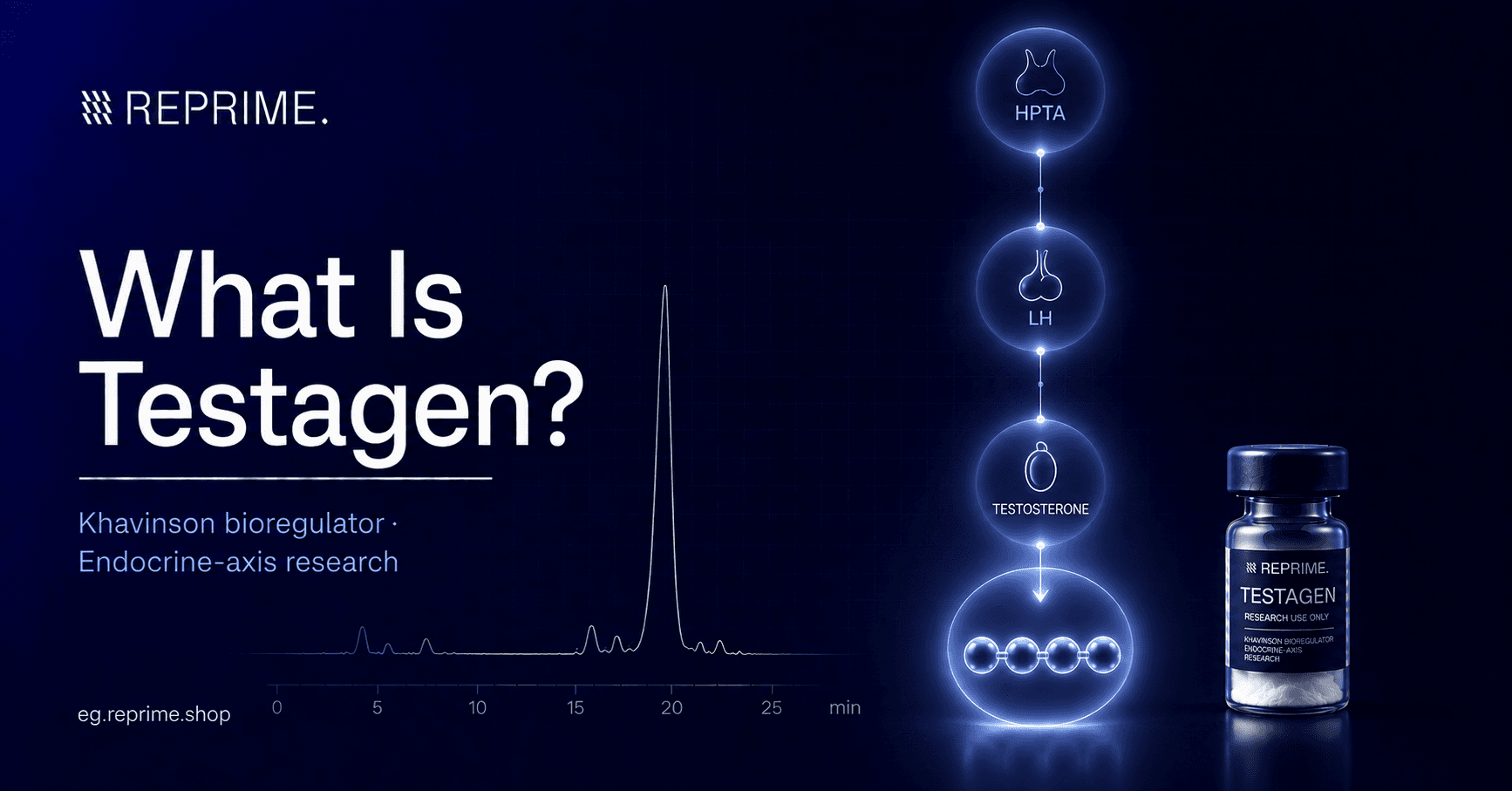
The testes-research member of the Khavinson bioregulator family — Testagen's context, the comparative method, and verified supply.
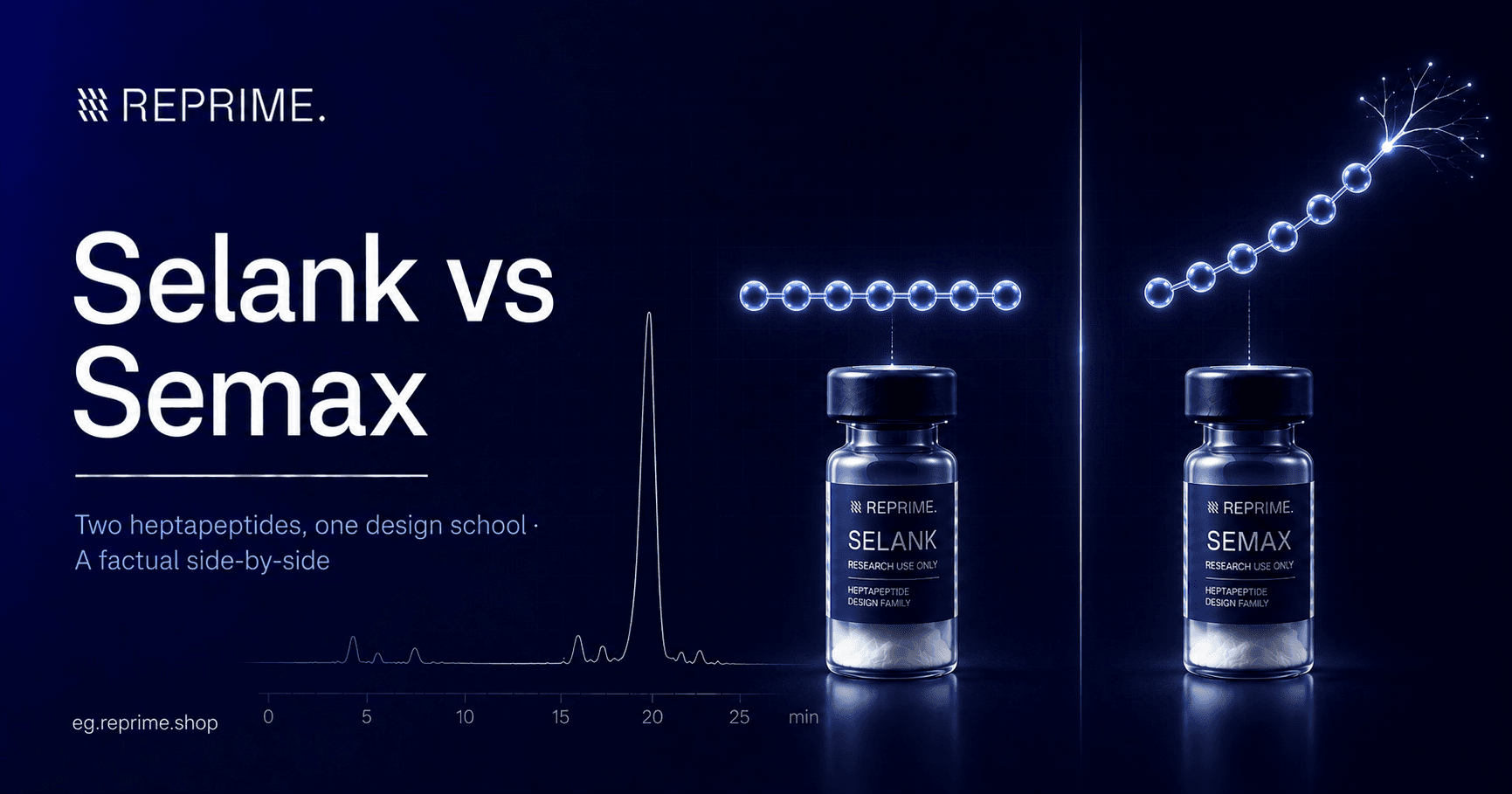
Two sibling heptapeptides from the same design school — how Selank and Semax differ in origin, research focus, and use as laboratory probes.
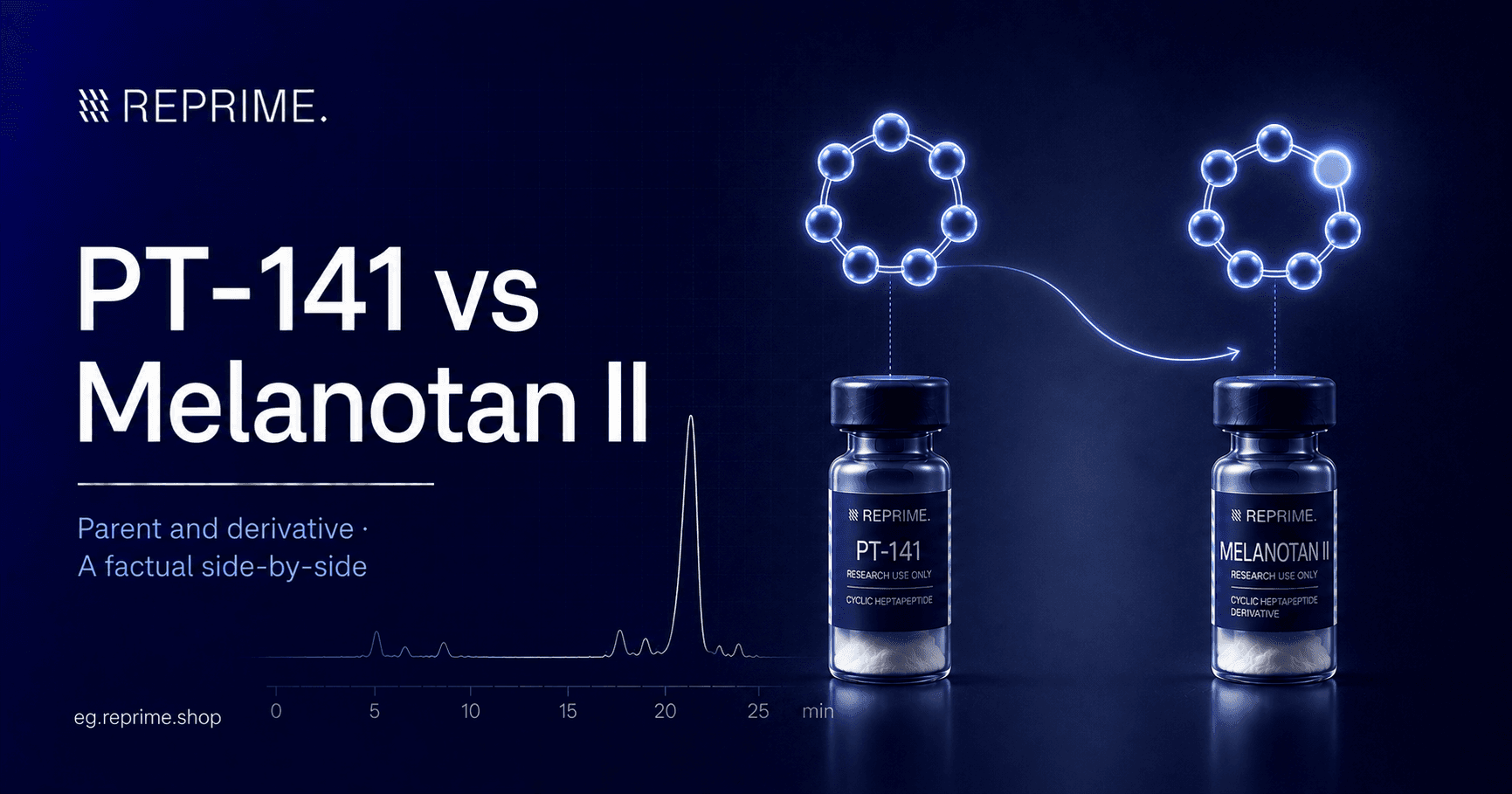
Parent and derivative in the melanocortin family — what actually separates Melanotan II from PT-141 (bremelanotide) in structure, history, and research use.
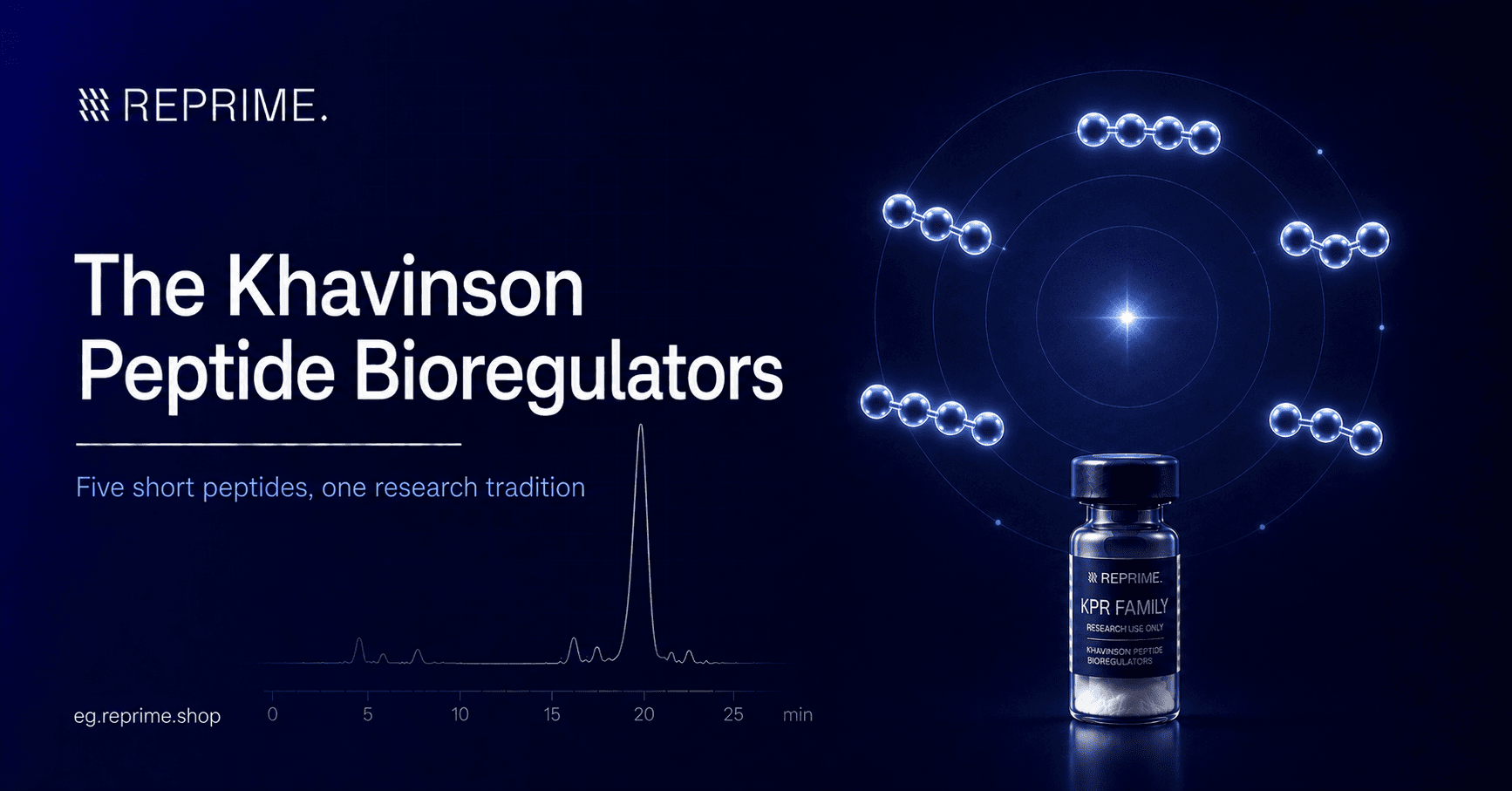
What peptide bioregulators are, where the Khavinson research tradition came from, and how its five catalogue members are studied as a comparative set.
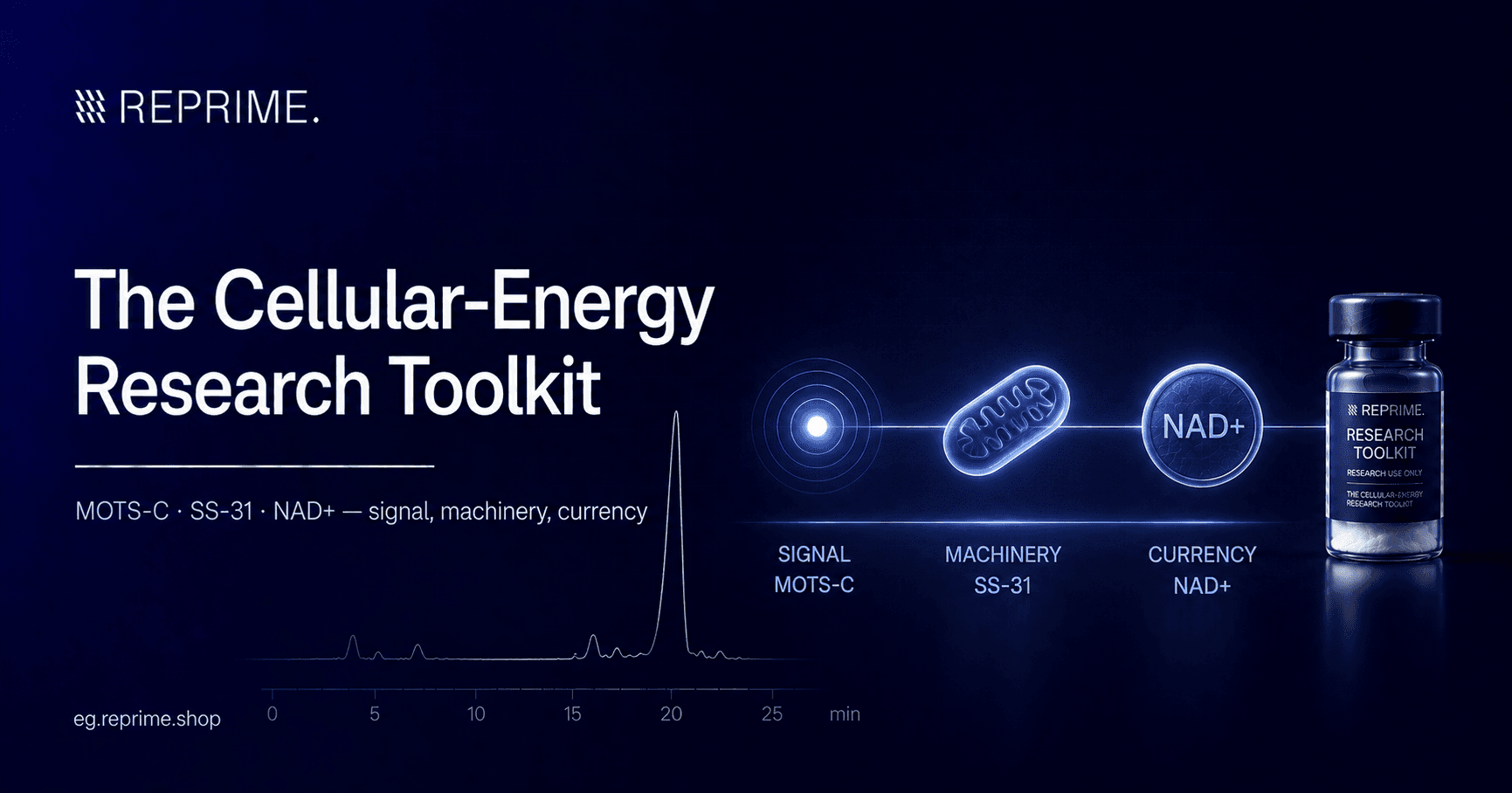
MOTS-C, SS-31, and NAD+ approach mitochondrial research from three different directions — a guide to choosing the right probe for the question.
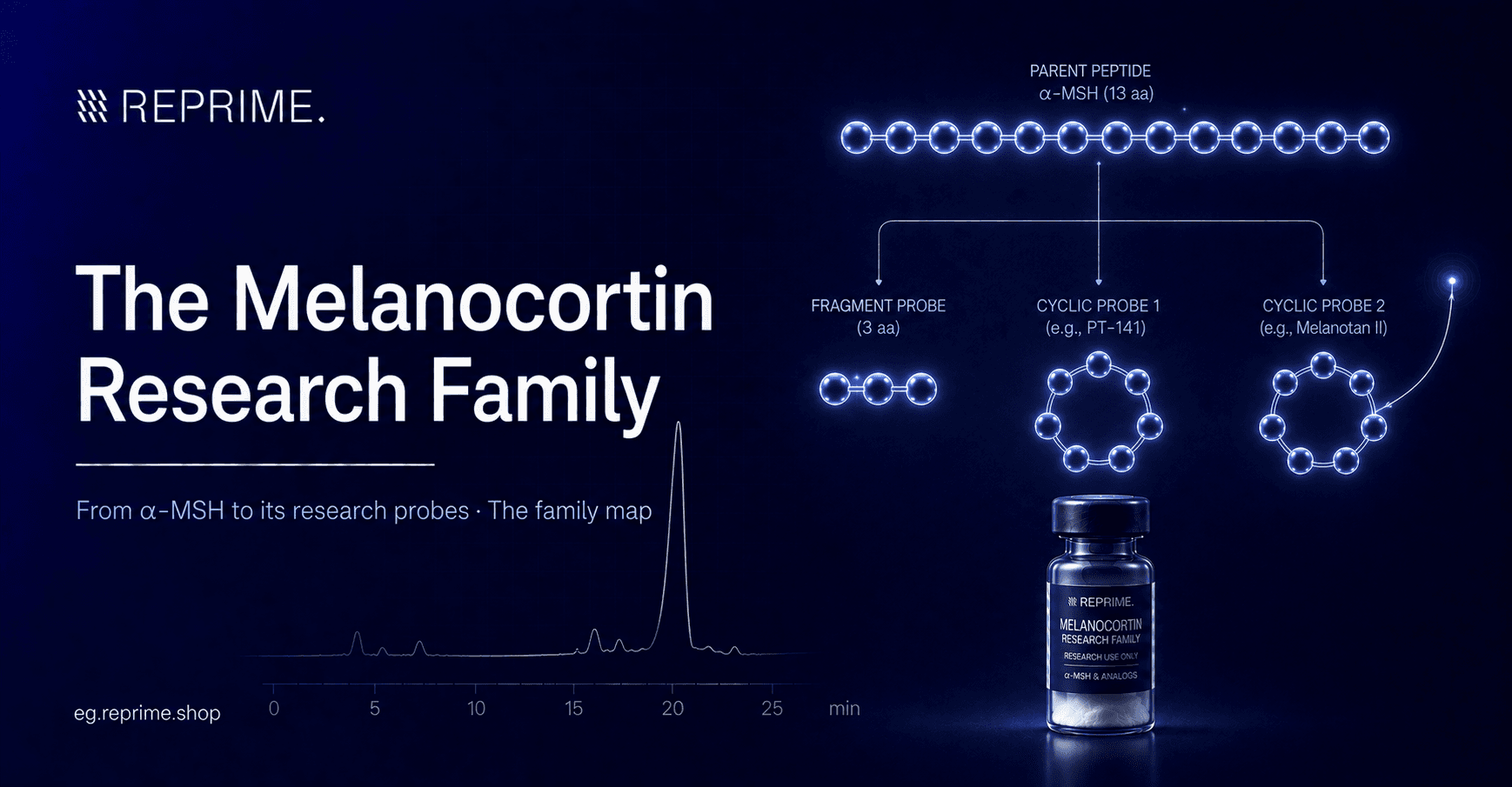
From α-MSH to KPV, Melanotan II, and PT-141 — how one thirteen-residue hormone spawned a family of research probes at every scale.