
Education
What Is DSIP?
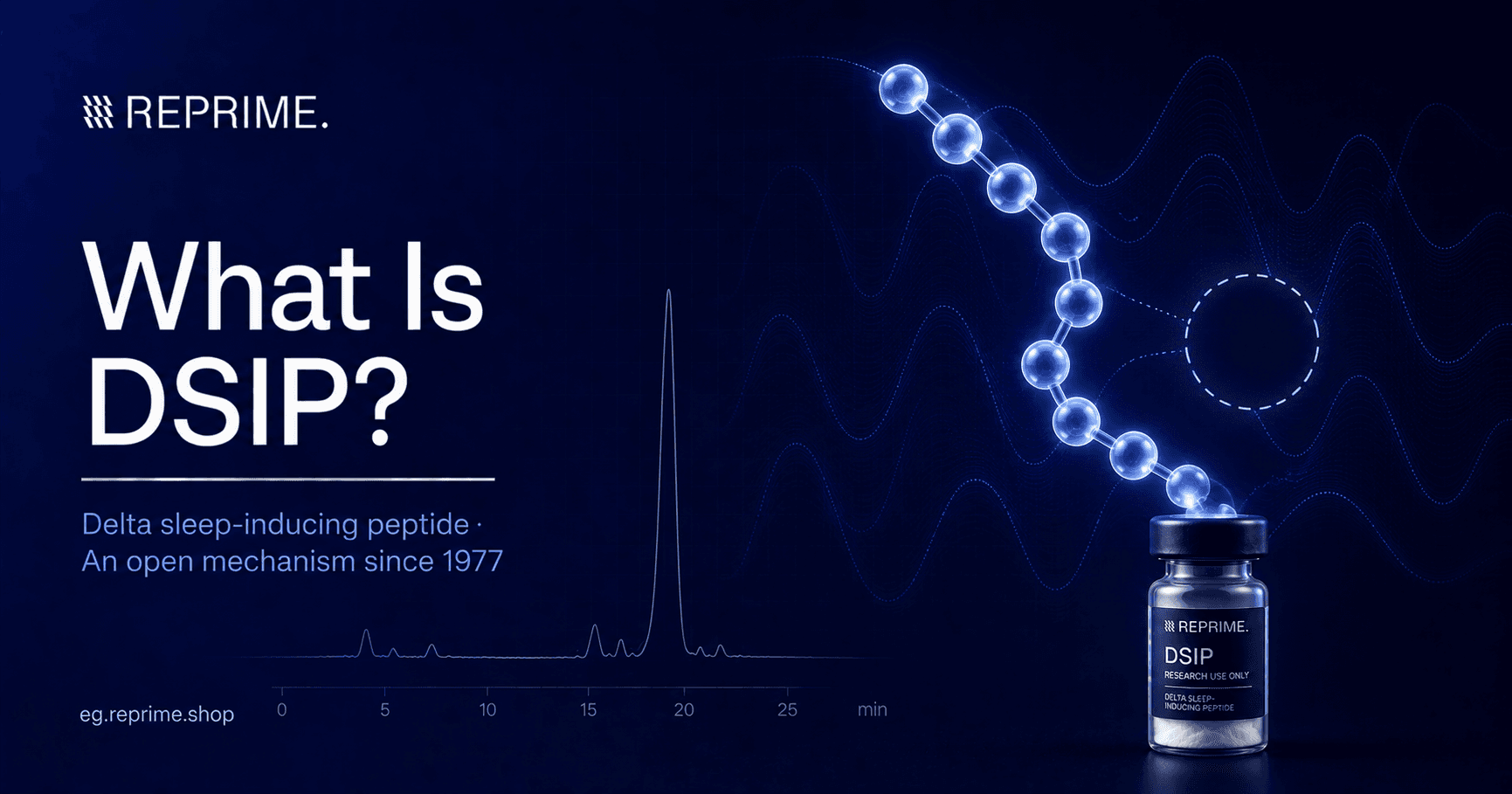
Delta sleep-inducing peptide — the 1977 discovery whose mechanism is still open, and why that keeps it in sleep research.
DSIP — delta sleep-inducing peptide — is a nonapeptide first described in 1977, isolated in sleep research from cerebral venous blood. Nearly fifty years later, it occupies a rare position: a compact, historically grounded peptide whose receptor biology remains genuinely unresolved.
What is DSIP?
DSIP is nine residues, discovered in experiments on sleep induction and named for the delta-wave sleep it was associated with. Unlike most peptides in this catalogue, no definitive receptor has been pinned down — which makes it less a finished story than a standing research question.
What researchers study it for
DSIP appears in sleep-architecture, circadian, and stress-response research, where its long literature provides context newer molecules lack. The unresolved mechanism is part of the appeal: protocols probing sleep regulation use DSIP precisely because its half-century record poses questions that modern methods can now revisit. As with any peptide whose interest is partly historical, batch purity documentation and disciplined storage keep the material itself from becoming a variable.
Working with research-grade DSIP
REPRIME supplies DSIP as a lyophilized 10 mg vial, HPLC-verified per batch with a public COA and first-scan verification code. See the DSIP product page. Research use only.
Frequently asked questions
What is DSIP?
Delta sleep-inducing peptide — a nonapeptide first described in 1977 in sleep research, studied since in sleep-architecture and stress-response models.
Is DSIP's mechanism understood?
Not fully — no definitive receptor has been established, which is unusual for a peptide with this much history and part of why it remains an active research subject.
How is research-grade DSIP supplied?
As a lyophilized 10 mg vial with batch HPLC verification, a public COA, and a verification code — see the product page.