
Education
What Is Melanotan II?
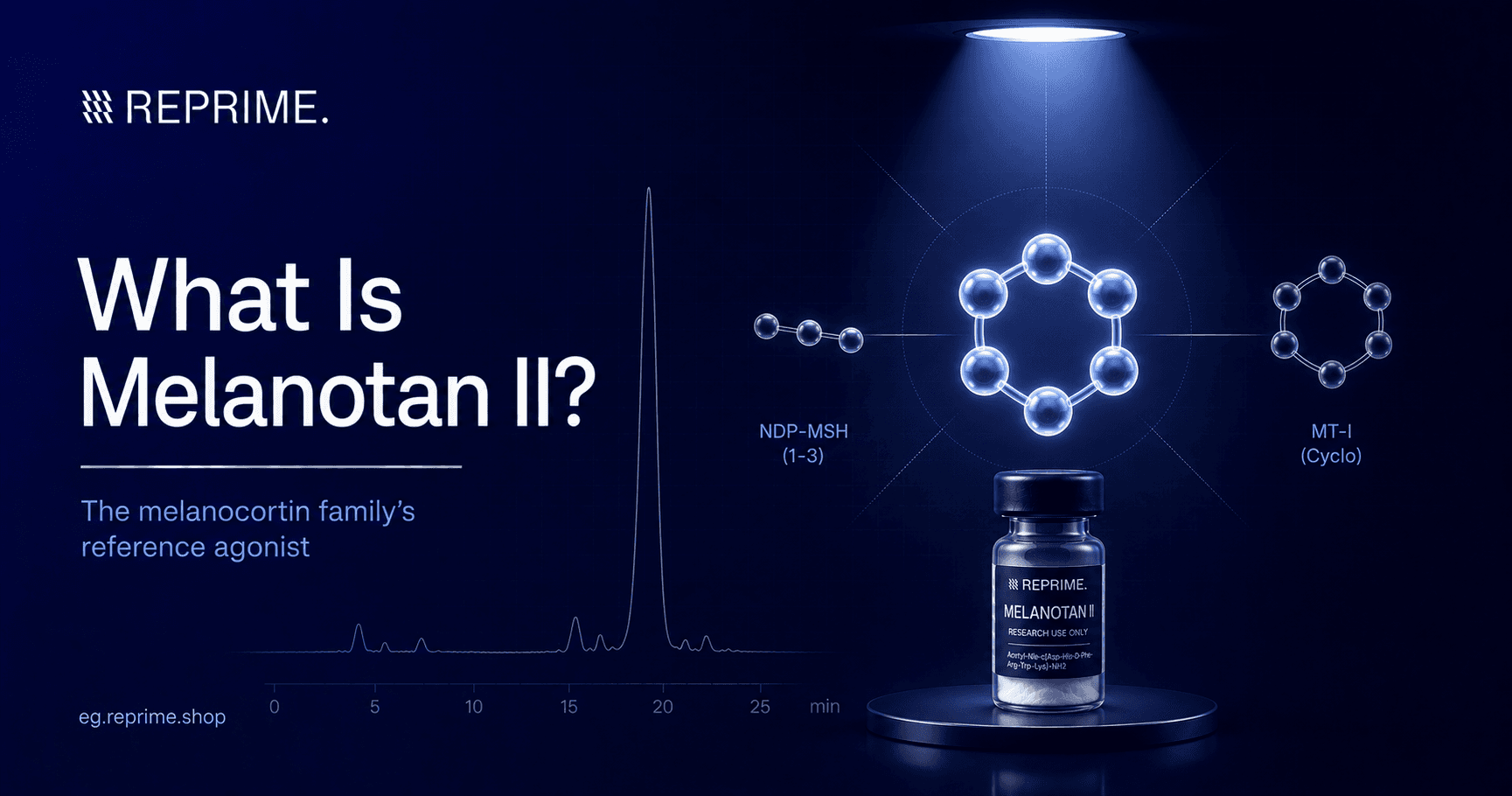
The cyclic α-MSH analog that became melanocortin research's reference agonist — structure, history, and how it anchors the family.
Melanotan II is a cyclic synthetic analog of alpha-melanocyte-stimulating hormone (α-MSH), engineered in the early 1990s for potency and stability far beyond the linear native hormone. It went on to become the reference agonist of melanocortin-receptor research.
What is Melanotan II?
Native α-MSH degrades in minutes; Melanotan II's cyclic lactam bridge locks its active conformation into a shape enzymes struggle to attack. That single design change turned a fragile hormone into a durable laboratory tool with broad agonism across the melanocortin receptor family — and spawned derivatives, most notably PT-141.
What researchers study it for
MT-II's home turf is melanogenesis and pigmentation-signalling research, where it is the standard receptor agonist. Beyond that, it serves as the benchmark against which selective melanocortin ligands are compared — including the narrower probes at both ends of the family, from its own derivative PT-141 to the minimal α-MSH fragment KPV. If a protocol touches melanocortin receptors, MT-II is usually somewhere in the comparison table — see PT-141 vs Melanotan II and the .